Introduction
A flat white wall is easy to live with, but it rarely makes anyone stop and look. Texture does. Done well, interior textured paint gives a wall depth that shifts through the day as the light moves across it. Done badly, it looks heavy, collects dust and is expensive to undo.
Most of the difference comes down to choosing the right finish for the room and preparing the wall properly. Below are the main styles, where they suit a Melbourne home, how the work is applied and the mistakes we see most often.
What interior textured paint actually is
Texture comes from one of two places. Some paints already contain fine aggregate such as sand or mineral particles, so the roller itself leaves a grainy surface. Other finishes are built up by hand, with a trowel, brush or sponge working a thicker coating while it is still wet. The first group is quicker and more predictable. The second gives more character, but the result depends heavily on the person applying it.
Texture also reacts to light in a way smooth paint does not. A side-lit wall in a north-facing living room will show every ridge, while the same finish in a dim hallway can look almost flat. That is why a small sample board can be misleading, and why we suggest checking a larger test area in the room itself before committing to a whole wall.
The main finishes and how they behave
Here are the interior textured paint styles homeowners ask about most.
Fine sand texture. A light, even grain that reads as soft rather than rough. It suits bedrooms and living areas and is the easiest style to touch up later.
Concrete-look finishes. A mottled, slightly cloudy surface in greys and warm neutrals, usually built from two or three thin layers. It works in open-plan rooms, studies and dining areas.
Limewash-style finishes. A chalky, cloud-like effect with soft movement in the colour. It is popular in bedrooms and period homes because it looks relaxed rather than polished. It can mark more easily than other options, so keep it away from busy hallways.
Venetian plaster-look finishes. A smooth, layered surface with a gentle sheen, burnished with a trowel. It looks refined, but it takes skill and time to apply, and repairs are difficult to blend.
Stipple and sponge effects. Small, irregular patterns that suit a feature wall. Choose them carefully, because a strong pattern can look dated quickly.
The heavier the texture, the harder it is to repair and clean. If you are unsure, start with a lighter finish. You can always add interest with colour later.
Concrete textured paint for a modern look
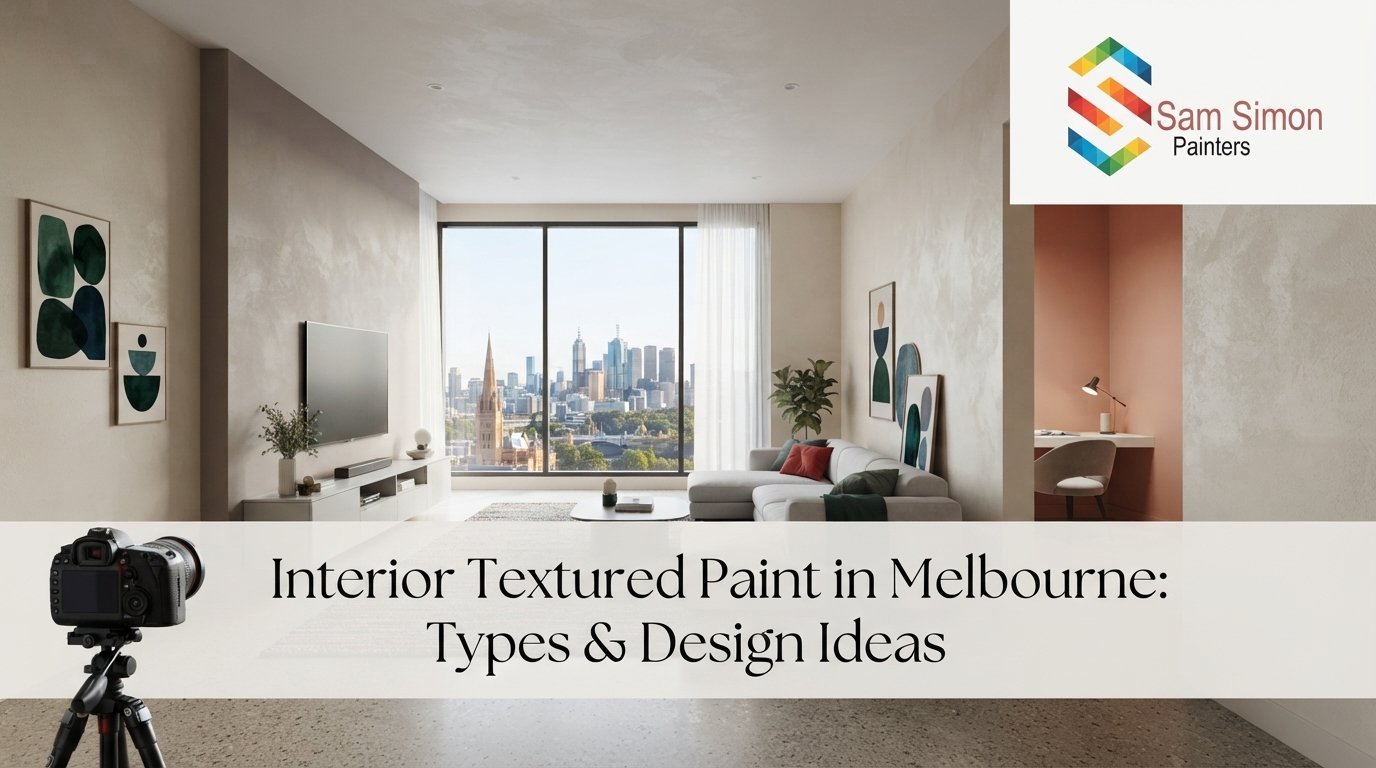
Concrete textured paint has become a regular request for open-plan living areas and home offices, usually on one wall behind a sofa, desk or dining table. The effect varies far more than people expect. A light version has a faint, cloudy grey that sits quietly in the background. A heavier one shows trowel marks and tonal shifts that dominate the room.
It pairs well with timber, black metal and plain furniture. It sits less comfortably against ornate cornices, picture rails and ceiling roses, so a Victorian terrace may suit a softer limewash instead.
Where textured paint for walls works best
Textured paint for walls is usually most effective when it has a clear job to do. One wall behind a bed, television or dining table gives the eye somewhere to rest and leaves the rest of the room calm.
Living rooms and bedrooms suit most finishes. An entry hall can handle a controlled texture on a single wall, but a narrow corridor looks cramped if every wall is textured, and scuffs show quickly.
Think harder about kitchens, bathrooms and laundries. Steam, grease and splashes get trapped in a rough surface, and cleaning takes longer. If you want texture in a wet area, keep it away from the splash zones and ask about a sealer rated for moisture.
When you are choosing indoor textured paint for a smaller room, go lighter in both colour and relief. A deep, heavy texture in a compact space can make the walls feel as though they are closing in.
Textured or smooth: which suits the room?
Standard interior wall painting with a smooth finish is still the sensible choice for most of a house. It is easy to clean, simple to repair and works with any furniture. Interior textured paint earns its place when you want a focal point. A light texture can also make minor surface variation, such as slightly uneven plaster, less noticeable. It is not a substitute for preparation, though. Cracks, holes and damaged areas still need proper repair before any texture goes on.
Many homes work best with smooth walls throughout and texture on one or two carefully chosen walls. For help with sheen levels and products across the rest of the house, our guide to choosing the right interior paint covers the basics.
Preparing the wall before any texture goes on
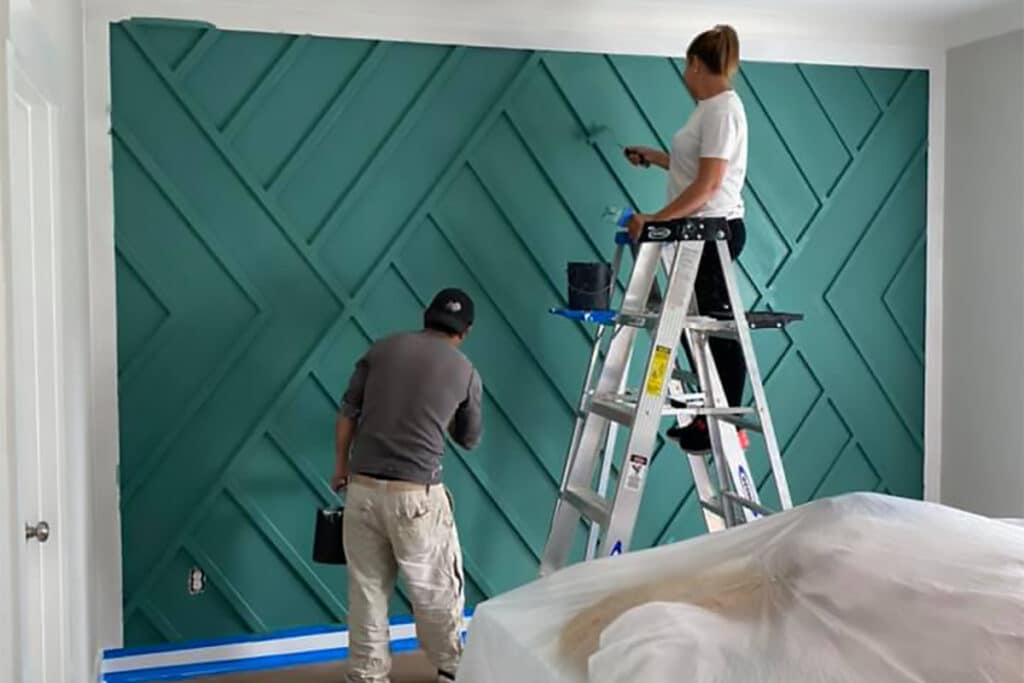
Texture does not hide a poorly prepared wall. Raised surfaces catch light at an angle and show patching, cracks and uneven plaster more clearly than flat paint. Any house interior painting that includes texture therefore needs careful preparation, with repairs finished before the first coat.
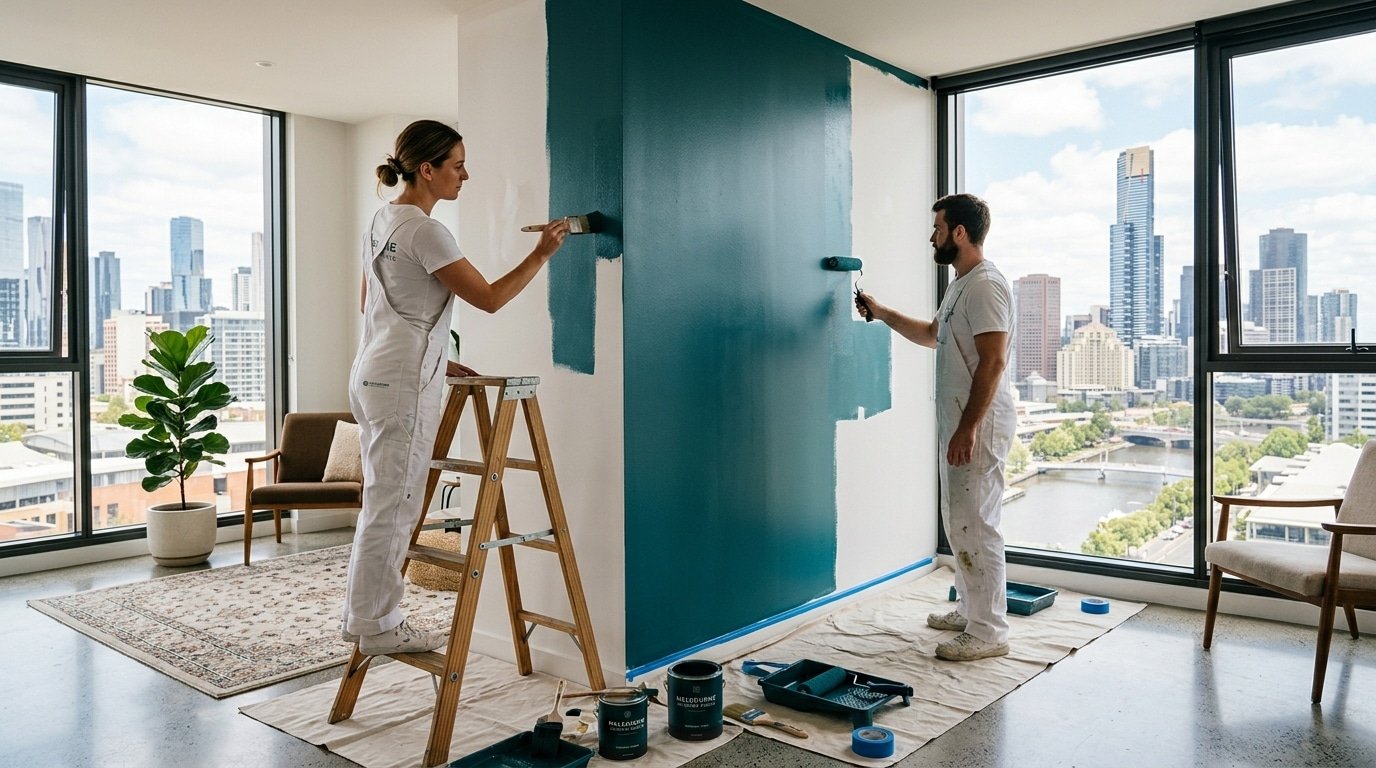
The wall is washed, loose or flaking paint is scraped back, and cracks and holes are filled and sanded smooth. Glossy surfaces are sanded to give the new coating something to grip. A sealer or primer then goes on so the texture dries evenly, because patchy absorption leaves visible blotches in the finished surface. Floors, windows and fittings are masked, because textured products spatter.
Homes built before the 1970s may have lead-based paint under later coats. Sanding it creates hazardous dust, so have the surface tested first and follow current Victorian safety guidance if lead is present. Do not dry sand it yourself.
Period homes bring other quirks. Original plaster is rarely perfectly flat, and a finish with some natural variation, such as limewash, often forgives that better than a crisp, uniform pattern.
How the finish is applied
Most interior textured paint systems go on in stages. A base coat sets the colour, one or more texture coats build the pattern, and a protective topcoat is added where the product calls for it. Each stage needs to dry before the next, so a single wall takes longer than people expect, and the whole job usually runs over several days.
Tools matter. A heavy-nap roller, a stiff brush, a sponge or a steel trowel each leave a different mark, and the skill of the person holding it matters more than the product. Working in consistent sections, without stopping mid-wall, avoids visible join lines.
Always check the manufacturer’s data sheet for drying and recoat times. They vary between products and with Melbourne’s changeable temperature and humidity.
What affects interior paint cost on a textured job
Clients often ask about interior paint cost before anything else, and a fair answer starts with the scope rather than a number. Several things move a quote up or down.
The size and number of walls matter most. Surface condition comes next, because a wall that needs extensive patching and sealing takes more time than a sound one. The finish itself counts: a light sand texture is quicker to apply than a layered concrete or Venetian plaster effect.
When you compare quotes, check that they describe the same work. Look for the preparation included, the product name, the number of coats and how repairs are handled. A very low quote often means something has been left out. A written, itemised quote protects you and makes comparison simple.
Cleaning, repairs and repainting later
Interior textured paint holds dust in its raised surface, so a soft brush or vacuum attachment is the usual way to clean it.
Repairs are the real catch. Matching a hand-applied texture is difficult, so a patch can show even when the colour is right. Keep leftover product from the original job and note the colour code.
If you are repainting house interior walls that already carry a texture, the first question is whether to keep it. A light texture can often be painted over with a suitable coating. A heavy or damaged one may need to be scraped, skim-coated and sanded smooth, which is a larger job than most people expect. Have the wall assessed in person before you decide.
Common mistakes to avoid
A few errors come up again and again.
- Choosing from a small sample chip and never checking the finish on a larger area.
- Texturing every wall in a room, which leaves the eye nowhere to rest.
- Picking a heavy relief for a small or dim space.
- Skipping the sealer on patched or porous walls.
- Treating texture as a way to hide damage, when it usually shows it.
- Forgetting about future repairs when selecting a hand-applied style.
Most interior textured paint problems come down to slowing down before the first coat goes on. If you also want help with colour, a colour consultation before you buy product can save a lot of second-guessing, and our room-by-room paint ideas show how a feature wall sits within the rest of a home.
Frequently asked questions
Can I use interior textured paint over existing paint? Usually, yes, if the existing coat is sound, clean and lightly sanded, and a suitable primer is used. Flaking or glossy surfaces need treatment first.
How long does interior textured paint last? That depends on the product, the wall and how much wear it gets. With good preparation and normal use, many finishes last for years. Ask for the warranty terms in your written quote.
Does texture hide cracks? A light texture can make hairline marks less noticeable, but it will not fix cracks, movement or damp. Repair them properly before any texture goes on.
Is textured paint suitable for bathrooms? Only with a moisture-rated product, good ventilation and some distance from direct splashes.
Can I apply a feature wall myself? A roller-applied sand texture is manageable for a confident DIYer. Hand-applied finishes such as limewash or Venetian plaster are much harder to get even, so practise on a spare board first.
Final thoughts
Interior textured paint rewards patience. Choose a finish that suits the room and the age of the house, keep it to the walls that deserve attention, and give the preparation the time it needs. If you would like a second opinion on a particular wall or finish, Sam Simon Painters is happy to talk it through. You can get in touch with a photo and a few details.