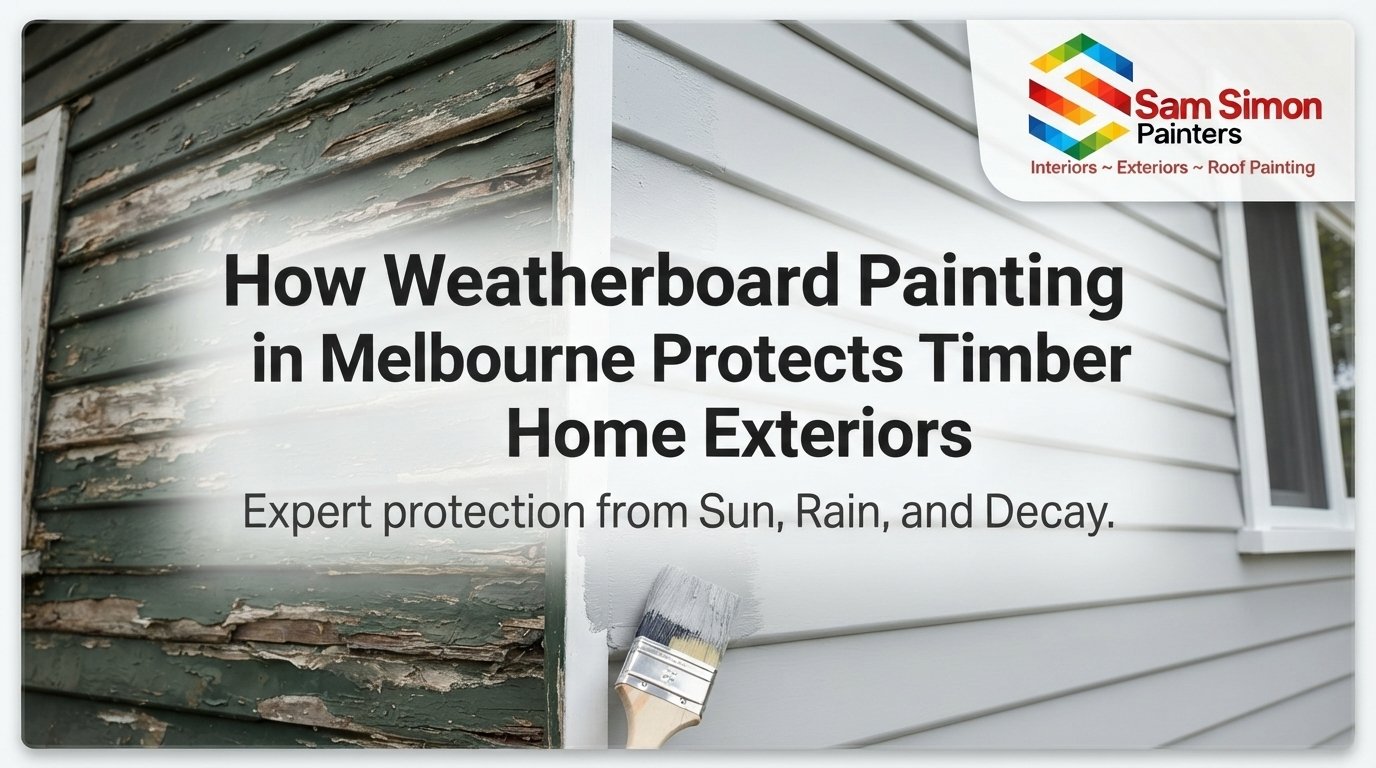
Weatherboard painting protects timber by placing a flexible, durable film between the boards and the weather. When that film cracks or peels, rain and sun reach the timber directly, and small faults grow into costly ones. Good weatherboard painting therefore starts with the condition of the coating and the timber underneath, not with a colour chart. This guide covers the warning signs and what to check before you approve a quote.
How Exterior Paint Helps Protect Timber Weatherboards
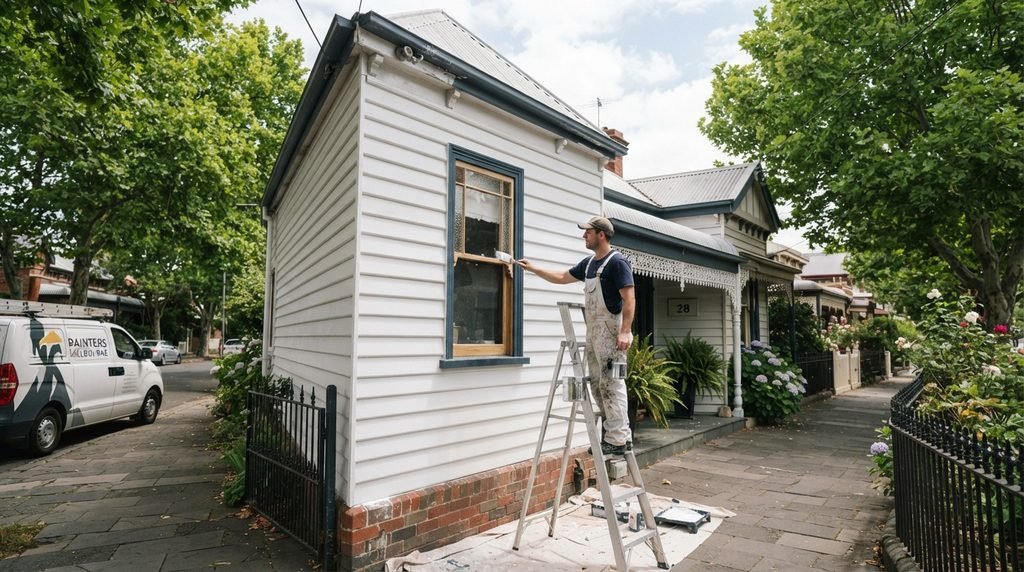
A sound paint coating shields timber from direct rain and sunlight, which slows weathering and helps water run off the boards. It protects only while it stays intact and bonded to the surface.
A healthy coating does several jobs:
- It limits how much rain soaks into the face of each board.
- It reduces the ultraviolet exposure that dries out and greys bare timber.
- It supports moisture control when gutters, flashings and drainage work properly.
- It keeps the exterior looking consistent.
- It makes damage easier to spot, because cracks and peeling stand out against an even finish.
Weatherboard painting has limits, though. It cannot repair rotten timber, fix a leaking gutter, correct poor drainage or solve a structural fault. Anyone planning timber weatherboard painting should deal with those causes first, because fresh paint over damp or decayed boards fails early.
Why Melbourne Conditions Affect Weatherboard Exteriors
Painting weatherboard houses in Melbourne means coping with strong sun, sudden rain and large temperature swings, which put steady stress on painted timber:
- Sun: Ultraviolet light slowly breaks down the paint surface, so walls that face north or west often fade and chalk first.
- Rain: Water collects at board ends, sills and the base of walls, where coatings tend to fail sooner.
- Temperature: Timber expands and contracts as it warms and cools. An ageing coating loses the flexibility to follow that movement.
- Shade: Walls under dense trees or on the south side dry slowly, which encourages mould and staining.
- Coast: Coastal homes can collect salt deposits that need extra rinsing.
Exposure varies by orientation, shelter, nearby vegetation and building condition, so one wall may need work years before another. Searches for weatherboard house painting Melbourne often return generic advice, yet your own house deserves a wall-by-wall assessment. Skip rigid rules about the “right” season and follow the paint manufacturer’s stated application conditions instead.
What Can Paint Condition Tell You About Your Weatherboards?
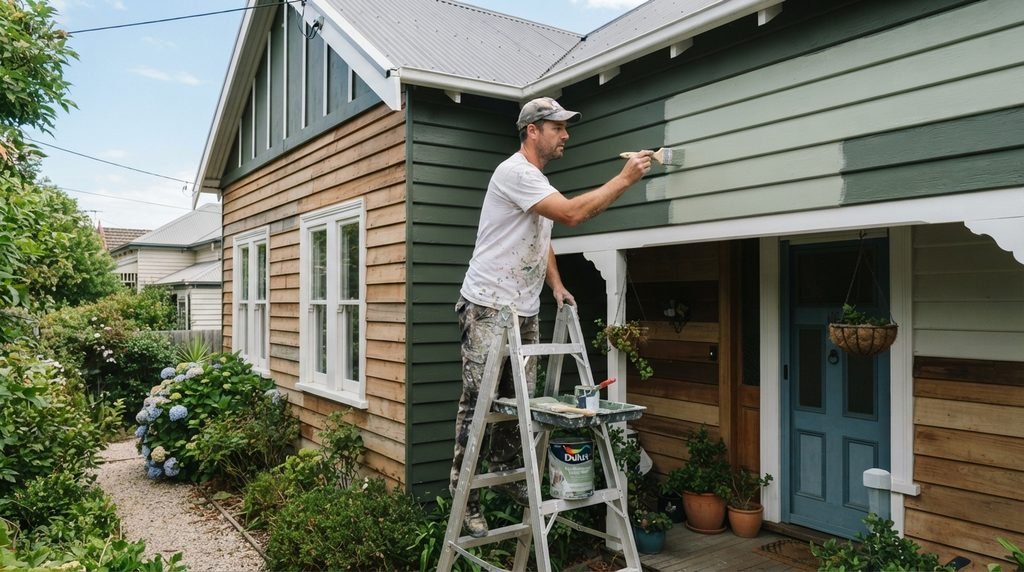
Paint condition shows whether the coating still protects the timber. Fading alone is usually cosmetic, but peeling, cracking or bare timber means water can reach the wood. Watch for these signs:
- Fading and uneven colour: Common on sun-facing walls and often cosmetic.
- Chalking: A powdery residue that rubs off on your hand as the paint binder breaks down.
- Peeling, blistering or cracking: The coating has lost its grip or its flexibility.
- Bare timber: Look along edges, board ends and any damaged sections.
- Persistent staining or mould: This often points to slow drying or ongoing moisture.
- Trouble spots: Check around window frames, board ends and lower walls first.
Symptoms do not always reveal the cause. If timber feels soft, stays damp or keeps staining after cleaning, investigate the source before anyone picks up a brush.
How to Decide Whether Your Weatherboards Need Repainting
Your weatherboards need repainting when the coating no longer protects the timber. Most weatherboard exterior painting decisions fall into one of three situations:
- The coating is sound. The paint is firmly attached, with only mild fading or surface dirt. Gentle cleaning, regular checks and minor touch-ups are usually enough.
- Deterioration is localised. A few areas show peeling, cracking or bare timber. Those spots need proper preparation, compatible repairs and recoating, and the rest of the wall may stay as it is.
- Failure is widespread, or the timber is damaged. Large areas of peeling or soft boards call for a broader assessment before you choose the repair and repainting scope.
Never cover failing paint or damaged timber just to improve appearances. The new coat will fail along with the old one. Weatherboard repainting lasts longest when it follows a clear assessment of what lies underneath.
Choosing the Best Paint for a Weatherboard House
No single product suits every home. The best paint for weatherboard house exteriors depends on the existing coating, the condition of the timber and how exposed the walls are.
- Exterior acrylic: Water-based acrylic coatings made for timber stay flexible and are a common choice.
- Other systems: Some existing surfaces suit oil-based or specialised coatings, so check what is already on the wall.
- Compatibility: New paint must bond with the old. Follow the manufacturer’s guidance, and test a small area when unsure.
- Primer: Bare timber and repaired sections usually need a suitable primer before the topcoat.
- Finish: Many owners choose a low sheen for the boards and a harder-wearing semi-gloss for trims, but the right choice varies by product and taste.
- Conditions: Follow the label’s temperature, humidity, drying and recoat limits.
Be wary of lifespan guarantees. Painting weatherboard houses with an incompatible product invites early failure.
What Homeowners Should Understand Before Painting Weatherboards
Plenty of tutorials explain how to paint weatherboards step by step. This section covers the decisions behind those steps, because they shape the scope of any weatherboard painting job:
- Assess first. Identify the existing coating before selecting new paint.
- Prepare the surface. Cleaning and removing loose or unstable paint help the new coat adhere.
- Prime where needed. Bare timber and repaired areas may need a compatible primer.
- Repair damaged timber. Rotten or split boards need repair or replacement, not a thicker coat of paint.
- Respect the product instructions. Weather during application and the time between coats both affect the result.
- Take care with older paint. Older coatings, particularly on homes built before the 1970s, may contain lead. Have the paint tested before anyone sands or scrapes it, and follow official safe-handling guidance.
How to Compare Weatherboard Painting Quotes
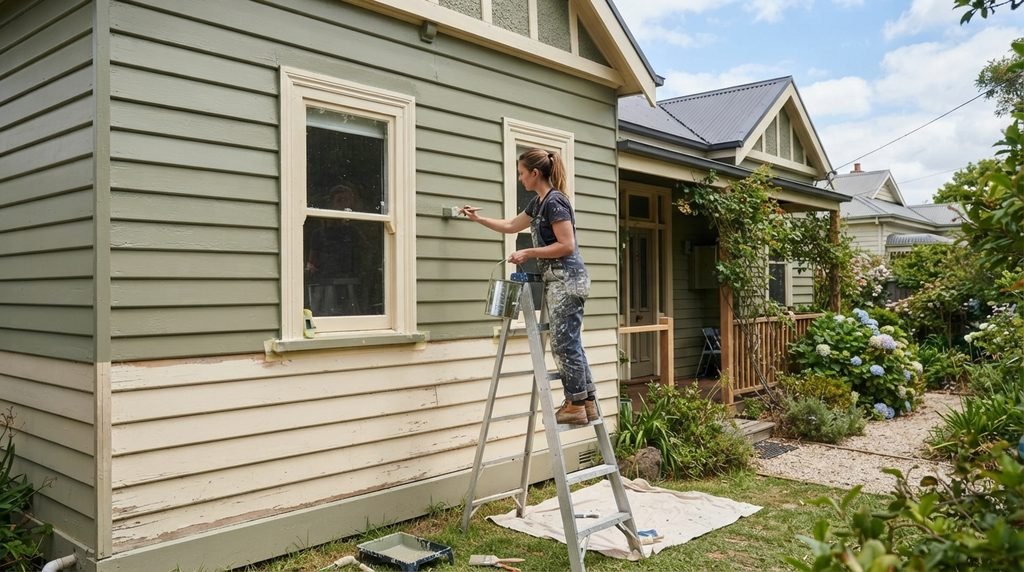
A good quote spells out the scope in writing, whether it covers a small repair or full weatherboard house exterior painting. Many weatherboard house painting Melbourne providers give written quotes, so compare the detail before the total. Check whether each quote explains:
- Which weatherboard surfaces and trims it includes.
- What preparation it allows for.
- How the painter will handle bare timber and deteriorated sections.
- Which primer and finish products it proposes.
- How many coats it includes, where the paint system specifies them.
- Whether timber repairs and access equipment (such as scaffolding) are included or excluded.
- How you will approve extra work if concealed damage turns up.
Every property differs, so a fair quote reflects the actual condition and scope of your home. Treat a vague quote with caution, and ask questions until the scope for your weatherboard painting is clear.
Maintaining Painted Weatherboards Between Repaints
Regular checks keep small faults from growing, and they make the next round of weatherboard exterior painting easier to scope. No routine can promise a set paint lifespan, but these habits help:
- Wash gently with a soft brush or low-pressure water, never a harsh blast.
- Walk around the house at least once a year and look for cracks, peeling and chalking.
- Check exposed edges, board ends, windows, doors and gutters, where moisture builds up.
- Investigate persistent dampness or recurring stains promptly.
Conclusion:
Painted timber stays protected only while the coating stays sound, so assess the paint and the boards together. Choose a coating that suits your existing surface, repair damage before you repaint and check your quote covers the work your house actually needs. Careful exterior weatherboard painting starts with an honest assessment, not a quick coat of colour.
If you would like a second opinion on your home, contact Sam Simon Painters to discuss your weatherboard painting requirements, or read about our exterior painting service first.
Frequently Asked Questions
How does weatherboard painting protect timber?
Timber weatherboard painting forms a protective film that limits direct contact between timber and rain or sunlight. This slows weathering and helps the boards shed water. The protection only lasts while the coating stays intact, so cracks or peeling need attention before moisture reaches the wood.
How can I tell if my weatherboards need repainting?
Look for peeling, cracking, blistering, chalking and bare timber, especially around window frames, board ends and lower walls. Fading alone is often cosmetic. If boards feel soft or stains keep returning, have the timber inspected before weatherboard repainting, because the cause may be moisture rather than the paint.
What is the best paint for a weatherboard house?
The best paint for weatherboard house timber varies. Exterior acrylic coatings made for timber are common, but the right choice depends on the existing paint, the timber condition and exposure. Check compatibility with the old coating, use a suitable primer on bare timber and follow the manufacturer’s directions.
Can weatherboards be repainted without replacing the existing boards?
Yes, when the boards are structurally sound. Guides on how to paint weatherboards assume this. Most exterior weatherboard painting jobs involve cleaning, removing loose paint, repairing small areas and recoating. Boards that are rotten, badly split or persistently damp may need repair or replacement first, since paint cannot restore damaged timber.
How does Melbourne weather affect weatherboard painting?
Melbourne’s sun, rain and temperature changes wear down coatings and move the timber beneath them. Shaded walls dry slowly and may grow mould, while coastal homes can collect salt. Painters follow the manufacturer’s limits for temperature, humidity and drying time, not a fixed season.
What should a weatherboard painting quote include?
A clear quote for weatherboard house exterior painting lists the surfaces and trims covered, the preparation allowed for, the primer and paint products, the number of coats and how timber repairs are handled. It should also explain how you will approve extra work if hidden damage appears. Vague wording makes quotes hard to compare.