Introduction
If you have been quoted for a paint job recently, there is a good chance someone mentioned airless spray painting. Most homeowners have heard the term but few understand what it means or how it differs from a standard brush and roller job. Airless spray painting looks simple from the outside: someone walks along a wall with a gun and the colour appears. In reality, the result depends on preparation, the paint chosen, the equipment settings and the skill of whoever is holding the gun.
Melbourne adds its own complications, with surfaces ranging from weatherboard cottages to rendered brick homes, and weather that can shift within a week. This guide covers how airless spray painting works, when it makes sense, which paint options suit it (including affordable spray paint options), how long paint takes to dry, and what to ask before hiring someone.
What Is Airless Spray Painting?
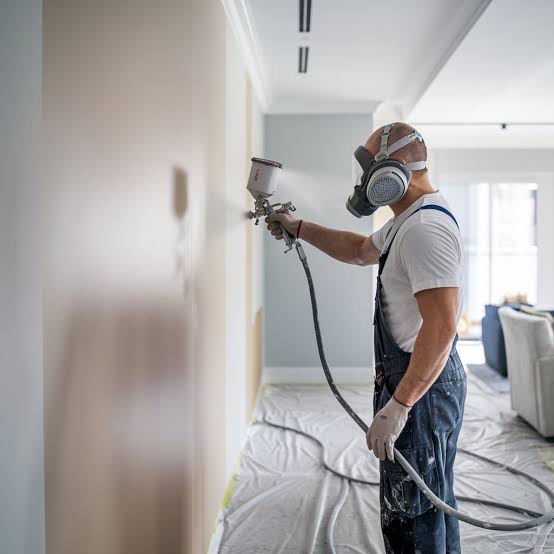
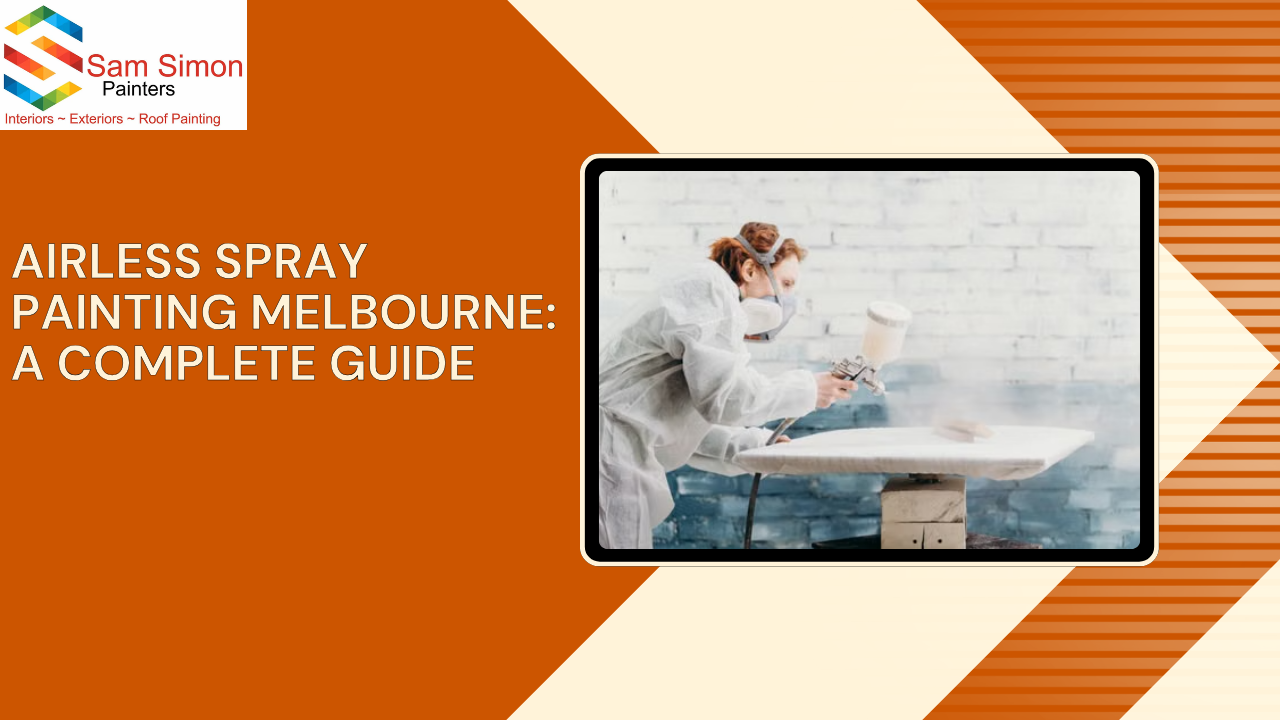
Airless spray painting is a method of applying paint using a pump that forces paint through a small tip at high pressure, rather than relying on compressed air to break the paint into a spray. The pressure itself does the work of atomising the paint, which is where the “airless” name comes from.
The basic process is straightforward: paint goes into the sprayer, the pump pressurises it, it travels along a hose to the spray gun, and exits through the tip in a fan pattern as the painter moves the gun across the surface at a steady speed.
That last step matters more than people expect. Spray pressure, tip size, paint thickness and the operator’s technique all affect how even the final coat looks. Two people using the same airless paint sprayer on the same wall can get quite different results depending on how they handle the gun.
How Does an Airless Paint Sprayer Work?
An airless paint sprayer is made up of a few key parts: a motor, a pump, a paint hose, the spray gun, an interchangeable spray tip, a pressure control dial, and a paint container or feed line. Each part plays a role in how the paint ends up on the wall.
Pressure and tip size work together. Too much pressure creates excessive overspray, meaning paint drifts further than intended. Too little pressure, or the wrong tip, produces an uneven pattern, with heavier paint in the centre and thin edges. Getting this balance right is one reason operator experience matters so much with airless spray painting, since the equipment has to be set up for the specific paint and surface, not left on a generic setting.
Airless Spray Painting vs Brush and Roller Painting
Spray painting is not automatically better than brush and roller work, it is a different tool for a different job:
| Factor | Airless Spray Painting | Brush/Roller |
| Application speed | Fast on suitable large areas | Generally slower |
| Finish | Can be smooth and uniform | Depends on technique |
| Large surfaces | Highly suitable | More labour intensive |
| Detailed areas | Requires masking and control | Easier with brush |
| Overspray | Must be controlled | Minimal |
| Preparation | Extensive masking required | Usually less masking |
| Equipment | Sprayer required | Basic tools |
For a large rendered wall or a long fence line, airless spray painting can save real time. For a single feature wall or a fiddly section with lots of trim, brush and roller work is often more practical, since there is less to protect and less overspray to manage.
Where Is Airless Spray Painting Used in Melbourne?
Around Melbourne homes and properties, airless spray painting tends to suit larger, more uniform surfaces rather than small or intricate ones: exterior walls, fences, large rendered surfaces, weatherboards, doors and garage doors, large interior walls and ceilings, and commercial premises. Whether spraying is the right call depends on the surface itself, what is nearby, the paint being used, and how well overspray can be contained. Not every surface benefits from being sprayed, and a good painter will tell you when a smaller job suits a brush instead.
What Paint Can You Use With an Airless Sprayer?
Different coatings behave differently once they are under pressure, so it pays to understand the basics before assuming any tin of paint will work.
Water Based Spray Paint
Water-based spray paint is commonly used with airless equipment because it tends to clean up easily and suits many interior and exterior surfaces. Compatibility still varies between products, so the manufacturer’s instructions on drying behaviour and recommended surfaces should guide the decision rather than general assumptions.
Primer Spray Paint
Primer spray paint is often needed before the topcoat, particularly when painting a brand new surface, covering certain existing colours, preparing porous materials such as bare timber or render, or improving adhesion on a difficult substrate. Which primer to use depends on both the surface and the finishing coating going over it, so this is not a one size fits all decision.
Textured Spray Paint
Textured spray paint has a thicker, more granular consistency than standard wall paint, so it usually needs a larger tip size and different pressure settings. Running textured coatings through a setup built for smooth paint often leads to a blocked tip or an inconsistent finish. If cost is a concern, it is worth asking your painter about affordable spray paint options that still suit the surface and expected wear, rather than choosing purely on price.
How to Prepare a Surface Before Airless Spray Painting
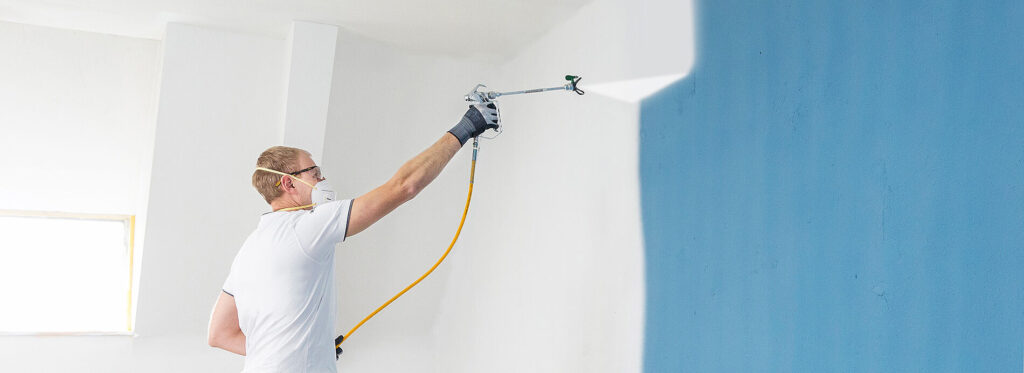
Preparation is arguably the single biggest factor in how the final coat turns out. Before any spraying happens, the surface generally needs to be cleaned of dirt and dust, stripped of loose or peeling paint, repaired where cracked or damaged, sanded where needed, and left to dry fully. Windows and fixtures need protecting, areas that should not receive paint need masking, priming should happen where required, and exterior work should be timed around suitable weather.
Spraying over a surface that is dirty, still damp, or structurally unstable tends to lead to poor adhesion and a patchy result, no matter how good the sprayer or the operator is. Airless spray painting is not a shortcut around proper preparation, it still depends on the groundwork being done first.
How Long Does It Take for Spray Paint to Dry?
There is no single answer to how long does it take for spray paint to dry, because it depends on several variables together: paint type, temperature and humidity on the day, air movement, the surface, how many coats are applied, and coat thickness.
It also helps to know the three stages of drying: touch dry, when the surface feels dry but is still soft underneath; recoat time, when a second coat can safely go on; and fully cured, when the paint reaches its final hardness. Rather than relying on a single figure, check the manufacturer’s guidance for the specific product, since drying times differ between brands. Melbourne’s weather does not make this easier, with humidity and temperature shifting within the same day, which is one reason exterior spray painting often works around a forecast rather than a fixed schedule.
Benefits of Airless Spray Painting
Used in the right circumstances, airless spray painting offers genuine practical advantages, without needing to oversell them.
- Faster application. On suitable large areas, an airless paint sprayer can cover ground more quickly than a brush or roller.
- Consistent coverage. Set up correctly and operated with care, spraying can produce a fairly even coat.
- Smooth finish. It can reduce visible brush marks and some roller texture on suitable surfaces.
- Suitable for large areas. Airless equipment earns its keep on jobs with a lot of surface area, such as long fences or full exterior walls.
- Flexible application. Different tips and pressure settings allow the same sprayer to be adapted for various coatings.
Each benefit assumes correct preparation and technique. Skip either one and the advantages tend to disappear quickly.
What Are the Downsides of Airless Spray Painting?
It would not be a balanced guide without covering where spray painting falls short. Overspray can travel further than expected and needs active control. Extensive masking is often required before work begins, and equipment costs more than basic brushes and rollers. Paint wastage can be higher with inexperienced operators, wind can seriously affect exterior spraying, and there is a real learning curve to using the equipment well. Cleaning the gear afterwards takes time, and coverage can end up uneven if the technique is off.
A poor result usually comes down to the same handful of mistakes: holding the gun too far from the surface, moving too slowly, using the wrong pressure or tip, applying too much paint in one pass, or failing to overlap passes correctly. None of these are flaws in the method itself, they are operator errors that proper training avoids.
How to Choose an Airless Spray Painter in Melbourne
If hiring someone rather than doing it yourself, ask the right questions upfront. A reliable airless spray painter should clearly explain what surfaces will be sprayed, what preparation is included, what paint and primer will be used, how many coats are planned, how overspray will be controlled, whether the quote is fixed, what is included in the price, and what touch ups might be needed later. An on site assessment tends to produce a far more accurate quote than one based only on photos, since so much depends on current surface condition.
FAQs
What is airless spray painting?
A method of applying paint using a pump that pressurises the paint and forces it through a small tip, creating a spray pattern without using compressed air to atomise it, unlike compressed air spraying.
Is an airless paint sprayer better than a roller?
It depends on the surface, project size, the finish you want and how much preparation is involved. Large, uniform surfaces often suit spraying, while detailed areas may suit a roller or brush better.
Can I use water based spray paint in an airless sprayer? Often yes, but compatibility depends on the specific product and sprayer specifications. Always check manufacturer instructions before assuming a paint will work through your equipment.
Do I need primer before airless spray painting?
Sometimes. Primer is commonly needed on new surfaces, porous materials, or when covering certain existing colours, depending on surface condition and the topcoat being used.
How long does it take for spray paint to dry?
It varies with paint type, temperature, humidity, airflow and coat thickness. Manufacturer guidance for the specific product is more reliable than a general rule of thumb.
Does airless spray painting create overspray?
Yes, it is a normal part of the process, which is why masking, protecting nearby surfaces and using correct technique are all necessary before spraying begins.
Is airless spray painting suitable for exterior walls?
It can be, for many exterior surfaces, as long as surface condition, paint choice and weather conditions on the day are appropriate for spraying.
Is airless spray painting cheaper than traditional painting?
Not always. Total cost depends on preparation, labour, materials, equipment and the size of the area, so it is worth comparing quotes rather than assuming.
Thinking About Airless Spray Painting for Your Property?
Airless spray painting can be a genuinely efficient option for the right surfaces, but a good result depends on preparation, paint choice and technique lining up correctly. Rather than choosing equipment or paint based on general advice online, it is worth having your specific surfaces assessed first.
Samsimon Painters can look at the surface, the preparation required and the most suitable coating approach for your Melbourne property before any work begins. Get in touch with the team for a quote and practical, honest advice based on your actual project.