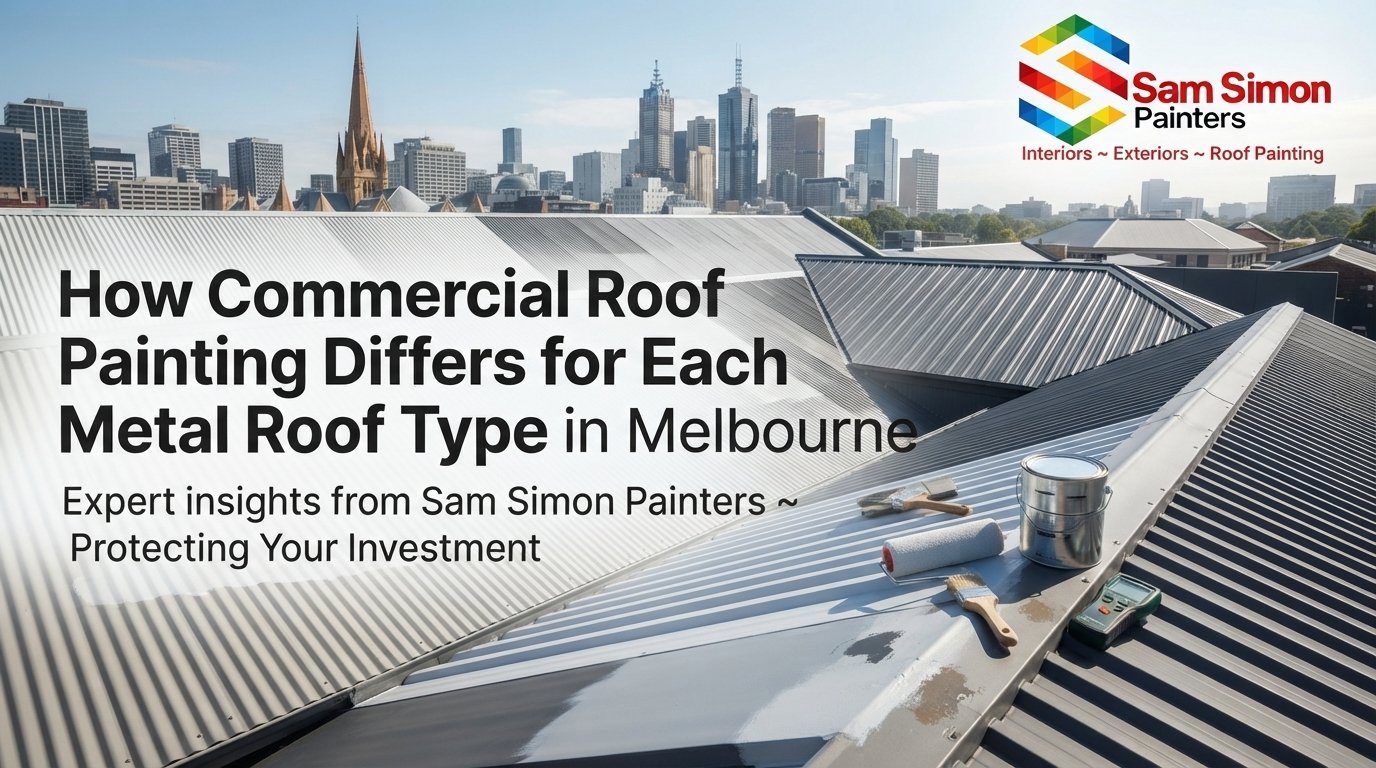
Commercial roof painting does not follow a single formula, because metal roofs differ in material, existing finish and surface condition. Each of these affects which primer and coating will bond and perform properly. Melbourne commercial properties commonly have pre-painted steel, galvanised metal roofing or sheets that have been recoated over the years. A product suited to one metal roofing substrate may need a different primer or preparation on another. That is why identifying the roof surface should come before choosing any paint or coating system. This article explains the main metal roof surfaces and what to consider when choosing a suitable system for your building.
Why Metal Roof Type Matters for Commercial Roof Painting
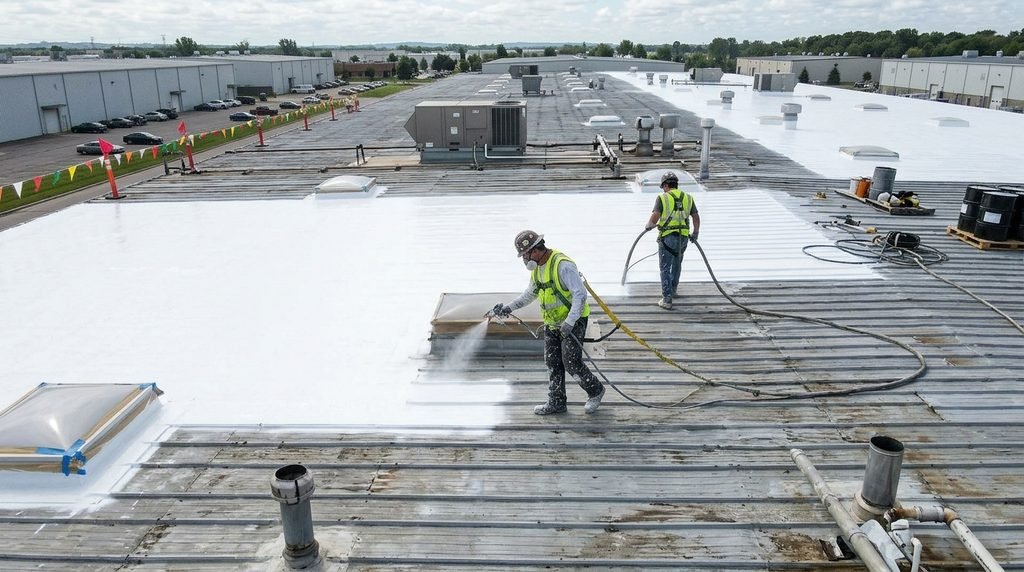
How a coating performs depends heavily on what it is applied to. Pre-painted metal roofing carries a factory-applied roof finish, while bare or galvanised metal has a zinc surface that behaves quite differently. Adhesion and primer requirements can vary between the two.
The existing finish matters just as much. Corrosion, chalking, flaking or leftover coatings all change what a new product can grip. A commercial roof coating that suits one surface can fail early on another if the difference is missed.
For that reason, commercial roof painting should be planned around the actual roof surface, not its colour or appearance. Manufacturers publish roof coating specifications that list suitable substrates, primers and application conditions, and these should be checked before any product is chosen.
Commercial Roof Painting for Different Metal Roofing Materials
Choosing a roof coating for metal roofs starts with knowing exactly which surface you have.
Pre-Painted Steel Roofing
Pre-painted steel has a factory-applied finish over the metal. If that finish is still firmly attached, it may provide a workable base for recoating, but it should never be assumed. Not every pre-painted roof can be coated directly.
Look for chalking, fading, peeling or other deterioration, since a powdery surface can stop a new coating from bonding. Before commercial roof painting begins, check roof coating compatibility with the existing finish, and whether the manufacturer requires a primer or particular preparation.
Galvanised Steel Roofing
Galvanised steel has a zinc coating that helps protect the steel beneath it. That same smooth, reactive surface can make coating adhesion harder, because some paints do not bond well to zinc. Any metal roof coating used here should be specified for galvanised surfaces, and a compatible primer may be needed.
Older galvanised sheets can be weathered or carry an earlier treatment, and both should be assessed before a system is chosen. No single preparation method suits every galvanised roof, so the manufacturer’s instructions should lead.
Previously Painted Metal Roofs
A roof that has been painted before needs its existing coating assessed first. Check whether the old coating is firmly bonded, and look for peeling, cracking or chalking. These are signs the finish may not accept another layer.
A new coat is only as secure as the one beneath it. Applying fresh material over a failing coating can lead to early peeling, and some products react poorly with certain older coatings. This is why commercial roof painting on a recoated roof begins with the existing surface, not the product.
Metal Roofs with Surface Corrosion
Minor surface corrosion is a different problem from widespread deterioration. Light surface rust may be treatable and suitable for a corrosion-resistant primer, while extensive rust needs closer assessment.
Establish how far the corrosion has spread before choosing a system, and follow the coating manufacturer’s instructions on treatment and priming. Where sheets are perforated or badly deteriorated, repair or replacement may be needed rather than painting alone, and commercial metal roofing contractors can advise on that work. Commercial roof coatings protect sound surfaces. They cannot restore lost metal.
How to Select a Suitable Commercial Roof Coating
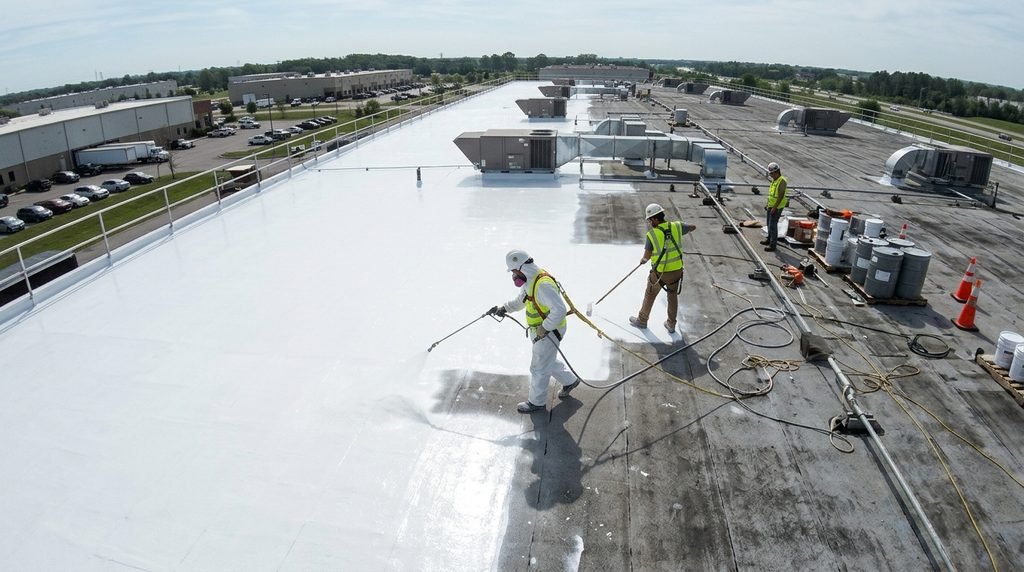
The product specification should guide selection in any commercial roof painting project, and no product should be called the best option unless its technical documentation supports it for your roof. Key factors:
- Substrate compatibility: confirm the coating is intended for the specific metal and existing finish.
- Primer requirements: check whether the product system needs a compatible primer.
- Existing coating condition: decide whether the old finish is suitable for recoating.
- Corrosion resistance: consider the level of protection the assessed surface needs.
- UV exposure: check that the product suits outdoor exposure and Melbourne conditions.
- Reflectivity: some coatings have reflective properties, but results depend on the product, roof and building.
- Application requirements: read the manufacturer’s instructions for surface condition, application and curing.
- System compatibility: make sure the primer and topcoat are designed to be used together.
Commercial roof coating systems are generally developed as a set, so roof coating compatibility should be confirmed before products from different ranges are combined. A reflective roof coating may reduce surface heat in some cases, but the outcome varies and should not be treated as a promise.
Common Mistakes When Choosing a Commercial Roof Painting System
Most coating problems trace back to a mismatch between product and surface:
- Choosing by colour or price alone. It may not suit the substrate.
- Assuming every metal roof has the same surface. Pre-painted and galvanised sheets need different checks.
- Skipping the compatibility check with the existing finish. Poor adhesion can lead to peeling.
- Overlooking primer. Some coatings will not bond properly without the right one.
- Expecting paint to fix serious corrosion or structural damage. A coating is not a repair.
- Expecting a reflective coating to guarantee lower energy bills. Savings depend on the building, insulation and use.
- Mixing products without checking they suit the same commercial roof coating systems. Incompatible layers can blister or lift.
What Should Melbourne Property Owners Check Before Repainting a Metal Roof?
A short checklist helps before arranging commercial roof painting:
- The roofing material, and whether it is pre-painted, galvanised or previously coated.
- The condition of the existing finish.
- Signs of corrosion or damaged sheets.
- Compatibility of the proposed primer and coating.
- The manufacturer’s instructions for each product.
- Roof access and site considerations for the commercial property.
- Any repairs needed before coating.
A professional assessment from experienced commercial roof painters can identify the surface and confirm whether repainting is appropriate. Melbourne’s variable weather matters mainly where a product lists temperature or moisture limits for application, so check those in the specification. If sheets need repair first, commercial roof services may involve commercial metal roofing contractors as well as painters.
Commercial Roof Painting for Melbourne Commercial Properties
Before a project starts, owners should understand their existing roof surface and the coating system proposed for it. We work with Melbourne commercial property owners, and as commercial roof painters, our focus is on understanding what each property needs.
We aim to look carefully at surface condition and coating suitability, then explain the proposed scope in clear terms. Questions about primers, existing finishes and choosing a roof coating for metal roofs are welcome.
Frequently Asked Questions About Commercial Roof Painting
Does commercial roof painting depend on the type of metal roof?
Yes. The metal substrate and its existing finish influence which coatings bond properly and whether a primer is needed. Pre-painted steel, galvanised steel and previously coated sheets each need checking against the product specifications before a system is chosen.
Can pre-painted steel roofing be repainted?
Often it can, subject to assessment. The existing factory finish needs to be firmly attached and compatible with the new coating. Chalking, peeling or fading should be assessed first, and the product specifications will confirm whether a primer or particular preparation is required.
Does galvanised steel need a special primer before painting?
It depends on the surface and the coating manufacturer’s specifications. Some commercial roof coatings call for a primer made for galvanised surfaces, while others set different requirements. Weathering or earlier treatments on the zinc can also change what the product needs.
Can a commercial metal roof be painted over an existing coating?
Sometimes, but commercial roof painting over an existing coating means checking it first. Its adhesion, condition and compatibility with the new product all matter. A coating that is peeling, cracking or chalking may not support another layer and can cause the new one to fail.
Which coating is suitable for a corroded commercial metal roof?
That depends on how severe the corrosion is, the surface condition and the manufacturer’s guidance. Light surface rust may suit a metal roof coating with a suitable primer. Extensive deterioration or perforated sheets may need repair or replacement instead, which is work for commercial roof services.
Are reflective coatings suitable for commercial metal roofs?
They can be, depending on the product, the substrate, the building conditions and the performance you want. A reflective roof coating may reduce surface heat in some situations, but it should be matched to the roof and not expected to guarantee particular results.
Conclusion
Identifying the metal roofing material, checking the existing finish and choosing a compatible coating system are the steps that shape a good outcome. Pre-painted steel, galvanised steel, previously painted metal and corroded surfaces each have different requirements, so a coating should never be chosen without considering the actual condition of the roof. Careful commercial roof painting starts with understanding the surface in front of you. If you own or manage a metal-roofed commercial property in Melbourne, contact Sam Simon Painters to discuss your painting requirements.