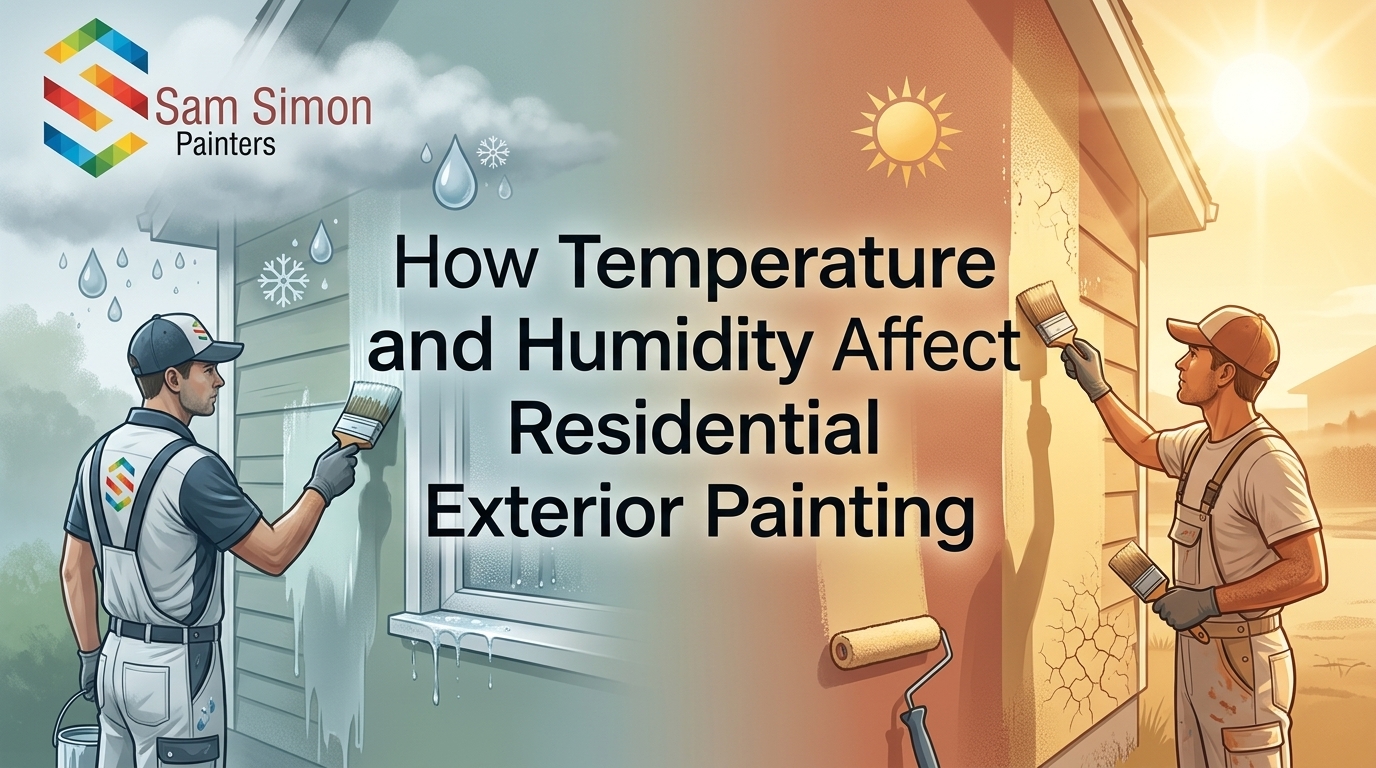
Picture a warm Melbourne afternoon. The walls feel dry to the touch, so the job looks finished. Then a cold night arrives, the air fills with moisture, and by morning the new coat has a dull patch or a tacky surface. This is a familiar story in residential exterior painting, and it shows that results depend on the conditions during application and drying, not on whether the day feels comfortable.
Temperatures can swing widely within one day, bay breezes shift the humidity, and a clear morning can turn wet by evening. This guide explains how temperature, humidity, dew point, wind and rain affect exterior paint, and why careful scheduling protects the finish.
Why Temperature Matters During Exterior Painting
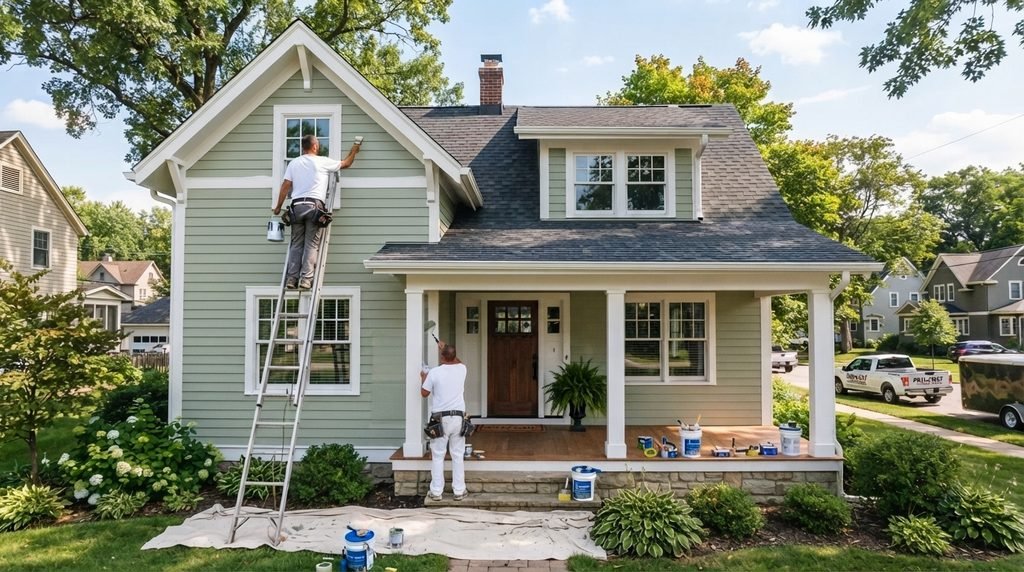
Temperature changes how paint behaves. Cool paint is thicker and harder to spread, while warm paint flows more easily. Temperature also controls evaporation, which is how water or solvent leaves the paint. Once enough has left, the paint particles join into a continuous protective layer. This is called film formation. Curing is the slower stage after that, when the layer reaches its full strength.
Each stage has its own needs, so a pleasant forecast alone is not enough.
Air Temperature Versus Surface Temperature
A thermometer in the shade shows the air temperature. The wall can tell a different story. A west-facing rendered wall in afternoon sun can be much hotter than the air around it, while a shaded timber fascia stays cool.
Painters assess the substrate, which is the surface being painted, and compare it with the limits on the manufacturer’s technical data sheet. Good residential exterior house painting starts with checking the wall itself, not only the weather app.
What Happens When Paint Dries Too Quickly?
On a hot surface, paint can lose its water before it has settled. Working time shortens, so brush and roller marks may stay visible, overlapping sections can show as lap marks, and the film may not form evenly.
This does not mean every fast-drying coating will fail. The outcome depends on the product, the substrate and the conditions during application.
What Happens When Temperatures Are Too Low?
Cold slows evaporation, particularly for water-based coatings. The paint can stay soft for longer, and film formation may be incomplete. A late-afternoon coat can also meet a cold night before it is resistant enough.
Minimum application and curing temperatures vary by product, so the data sheet is the guide.
How Humidity Affects Residential Exterior Painting
Relative humidity compares the moisture in the air with the most the air can hold at that temperature.
High Humidity and Slower Drying
When the air is already full of moisture, water leaves water-based paint more slowly. Possible results include rain reaching the coating before it is ready, surface marking and a tacky feel that lingers.
The effect varies with the coating chemistry, airflow and temperature, which is why residential exterior painting schedules need some flexibility.
Low Humidity and Rapid Moisture Loss
Very dry air, especially with heat and wind, can pull moisture out of some coatings quickly. Less working time can affect levelling, which is how well the paint smooths out, and can leave brush marks or visible overlaps.
Low humidity is not always ideal. It can work against the painter just as high humidity can.
Why Surface Moisture Is Different From Humidity
Relative humidity describes the air. Surface moisture is water sitting in or on the wall. A wall can stay damp after rain, washing or overnight condensation even when the forecast looks suitable.
Painting over a damp substrate can compromise adhesion, which is how well paint grips the surface, or cause coating defects.
Dew Point and Condensation Risks in Melbourne
What Is the Dew Point?
The dew point is the temperature at which air becomes saturated and water vapour begins to condense into liquid. When a surface cools towards or below the dew point, a thin film of moisture can form on it, even without any visible rain.
How Overnight Condensation Affects Fresh Paint
On clear Melbourne evenings, walls lose heat quickly. If a wall drops below the dew point, moisture can settle on freshly applied paint overnight. Depending on the coating, this may reduce adhesion or compromise the finish.
Why Painters Check Conditions Before Applying Paint
Painters compare surface temperature, air temperature and relative humidity, then check the dew-point requirements in the product data sheet. The safe margin between surface temperature and dew point depends on the manufacturer’s instructions, so there is no single figure that suits every paint.
How Wind, Sunlight and Sudden Weather Changes Affect Paint
Direct Sunlight and Hot Exterior Walls
Sunlight heats a wall unevenly. One section can dry much faster than the part beside it, which may cause uneven appearance across the same surface. Exposed and shaded elevations may need different scheduling.
Wind and Changing Drying Conditions
Wind speeds up evaporation and can blow dust or debris onto wet paint. Faster drying does not guarantee a better finish, and wind does not always help. On many residential exterior painting jobs it shortens working time just as heat does.
Rain After Exterior Painting
For residential exterior painting, rain can damage a coating that has not yet built enough water resistance. Dry-to-touch time is not the same as the time needed to withstand rain. A surface can feel dry and still wash off or mark when wet.
Check the product’s rain-resistance and recoat information on the data sheet.
Melbourne Weather and Residential Exterior Painting
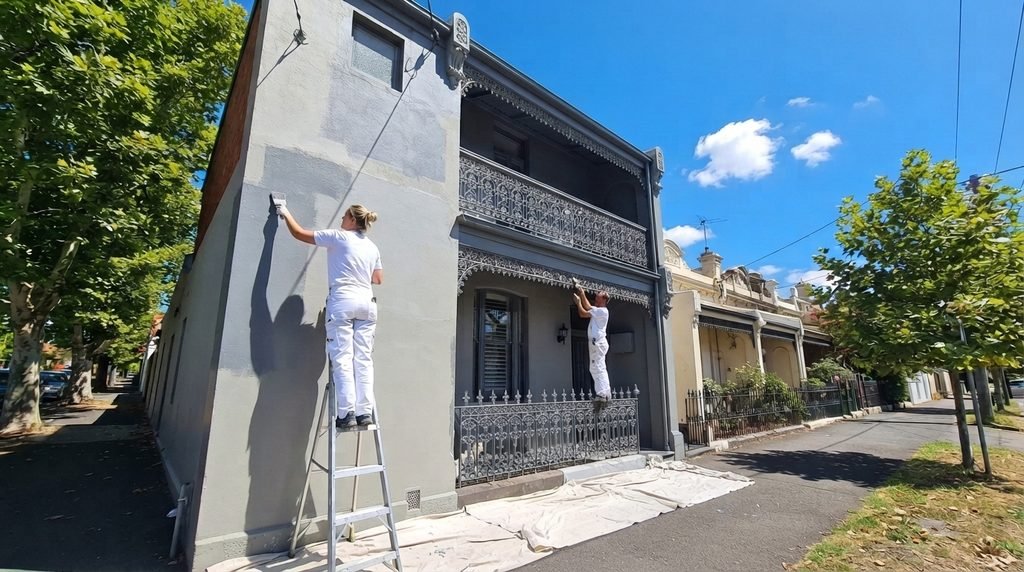
Melbourne’s Changing Daily Conditions
In Melbourne, temperature, cloud, wind, humidity and rainfall can all change within one day, which affects any exterior painting residential project. A morning forecast may not match conditions at 3 pm or at 2 am, when the paint is still drying.
Summer Heat and Exposed Walls
In hot weather, the main concern is the wall itself. Afternoon sun can push surface temperatures well past the air temperature and shorten working time. For residential exterior house painting, the practical response is to assess each elevation and adjust the schedule, for example, working shaded sides during the hottest part of the day.
Cool Weather, Moisture and Overnight Temperatures
Cool conditions slow drying, and overnight condensation adds risk. Winter is not automatically unsuitable for residential exterior painting, though. Suitability depends on the forecast, the surface condition and the product specifications.
Choosing a Suitable Painting Window
The best window is a period when the surface, air temperature, humidity and expected weather all stay within the coating’s requirements, both during application and during drying. No season guarantees this, which is why residential painting Melbourne homeowners book should stay flexible.
The same logic applies to any residential painting project, from a single fence to a full home.
How Professional Painters Assess Weather Before Starting
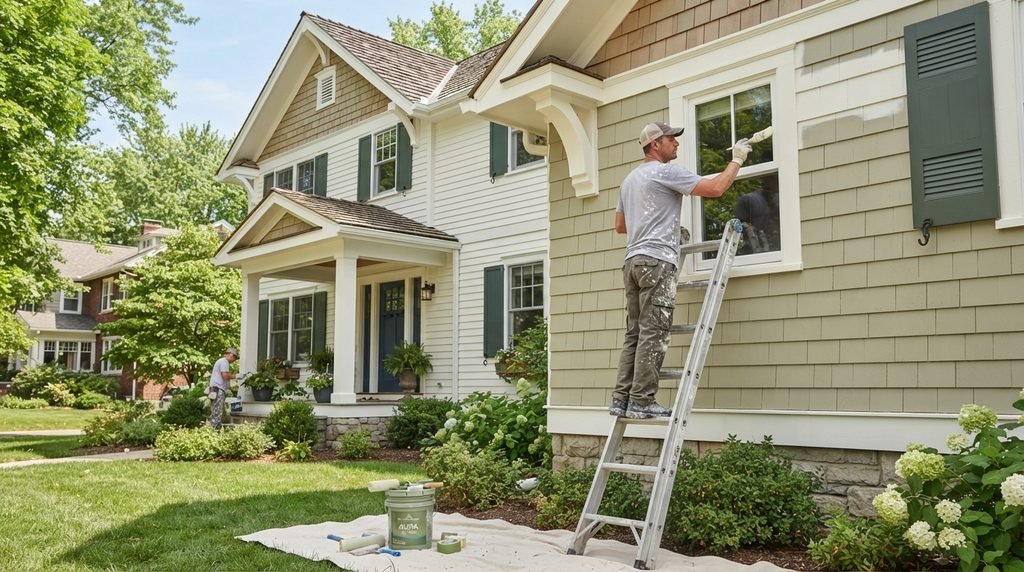
Before starting residential exterior painting, painters typically:
- Review current conditions and the forecast for the application and drying period.
- Measure or assess air and substrate temperatures.
- Check relative humidity, surface dampness and dew-point risk where relevant.
- Confirm the coating’s temperature, humidity, recoat and rain-resistance requirements.
- Reschedule when conditions fall outside the product’s limits.
When to Reschedule Exterior Painting
Warning signs include a wall that stays damp, temperatures outside the product’s limits, a high condensation risk, or rain expected before the coating has enough water resistance. Delaying can protect the finish and reduce avoidable defects.
Working With Residential Exterior Painting Contractors
Homeowners planning residential exterior painting work can ask how weather will be assessed and what happens if the forecast changes. Reliable residential exterior painting contractors should be able to explain how they check surface conditions and when they would postpone work.
Common Weather-Related Exterior Paint Problems
| Weather condition | Potential effect |
| Excessively hot substrate | Rapid drying, poor flow or lap marks |
| Low application temperature | Slow drying or incomplete film formation |
| High relative humidity | Extended drying time |
| Damp substrate | Adhesion problems or coating defects |
| Condensation | Moisture-related finish problems |
| Rain too soon after application | Surface damage or wash-off |
| Strong wind | Faster evaporation or dust contamination |
These residential exterior painting risks are possible outcomes, not guaranteed results. The coating type, substrate and application conditions also matter.
Frequently Asked Questions About Temperature and Humidity
What temperature is best for residential exterior painting?
There is no single best temperature. Each coating has its own minimum and maximum application range, and the surface temperature matters as much as the air. Check the manufacturer’s technical data sheet and assess the wall, not just the forecast.
How does humidity affect exterior painting?
High humidity can slow evaporation from water-based paint, which extends drying time and leaves the surface vulnerable to rain or marking. Very low humidity can speed moisture loss and reduce working time. The effect depends on the coating, airflow and temperature.
Can exterior walls be painted in hot weather?
Often yes, but the wall temperature must stay within the product’s limits. Direct sun can heat a surface well above the air temperature. Painters may work shaded sides first or adjust start times.
What happens if exterior paint dries too quickly?
Rapid drying can reduce working time, causing poor flow, visible lap marks, brush marks or uneven appearance. It may also affect film formation. Outcomes depend on the product, substrate and conditions.
Can cold temperatures affect paint adhesion?
Yes, they can. Cold slows drying and may interfere with film formation, especially in water-based coatings. A coat exposed to a cold, damp night too early may also be compromised. Minimum application and curing temperatures differ between products.
How long should exterior paint be protected from rain?
It depends on the product. Dry-to-touch time is not the same as rain resistance. The manufacturer’s data sheet states how long a coating needs before it can withstand rain, and that period can lengthen in cool or humid conditions.
What is the dew point, and why does it matter when painting?
The dew point is the temperature at which air becomes saturated and moisture condenses. If a wall is near or below it, a thin layer of water can form on the surface. That moisture may affect adhesion or the finish of fresh paint.
Can painters paint exterior walls when humidity is high?
Sometimes, if the surface is dry, the dew-point risk is low and the data sheet allows it. High humidity slows drying, so rain and overnight moisture become bigger risks. Painters often postpone when conditions are marginal.
How do Melbourne weather conditions affect exterior painting?
Melbourne’s conditions can change within a day, so a morning forecast may not reflect afternoon heat or overnight condensation. Painters should check the forecast for the whole application and drying period.
How do residential exterior painting contractors decide when to reschedule?
They compare current and forecast conditions with the product’s limits. Damp surfaces, temperatures outside the range, high condensation risk or rain expected too soon are common reasons to delay.
Final Thoughts on Weather and Residential Exterior Painting
Air temperature, surface temperature, humidity, condensation, wind and rainfall all shape how an exterior coating dries and performs. Suitable conditions need to hold during application and through the critical drying period, not just at the moment the first coat goes on. Checking product specifications and monitoring changing weather helps reduce the risk of avoidable defects.
If you are planning residential exterior painting in Melbourne and want to talk through weather-dependent scheduling, contact Sam Simon Painters to discuss your home.