
Introduction
Your office looks tired, the lease renewal is coming up, or a new tenant is about to move in, and someone has to decide who picks up the brush. It’s tempting to hand the job to whoever painted the break room last time, or to let facilities staff squeeze it in between other tasks. The trouble is that an office repaint gone wrong costs far more than the paint itself: lost trading hours, a patchy finish in the reception area clients see first, or a body corporate complaint that stalls the whole project.
This guide sets out what commercial interior painters actually do differently, when that difference matters, and what Melbourne businesses should check before booking the job.
What Commercial Interior Painting Actually Involves
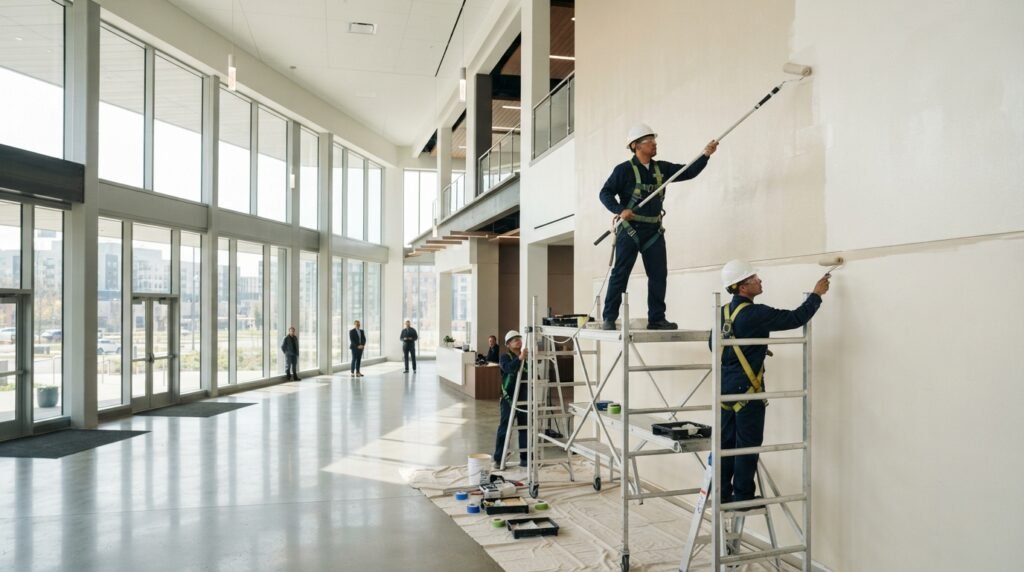
Commercial interior painters do far more than roll colour onto drywall. The work includes prepping partitions, working around fitted joinery and IT infrastructure, painting reception areas and meeting rooms to a finish clients will judge on sight, and coordinating with whoever manages the building. Commercial interior painting services typically also involve protecting furniture, servers and stock during the job, then cleaning the site properly before staff return the next morning.
How It Differs From a Standard Repaint
A house repaint usually happens in an empty or lightly used space, on the homeowner’s schedule. An office repaint happens around desks, staff, deliveries and sometimes other tenants in the same building. That single difference is why commercial interior painters plan the job differently, from the hours worked to the products chosen.
The Real Risks of Skipping a Specialist
Painting an occupied workplace without commercial experience creates problems that only show up after the fact. A patch job on a feature wall might look fine at first, then flash under office lighting once it dries. An inexperienced crew working during business hours can disrupt calls, meetings and foot traffic in ways that cost more in lost productivity than the painting job itself. There’s also a liability question: if commercial interior painters aren’t insured for commercial premises, any damage to fittings, flooring or equipment becomes the business owner’s problem to chase up, not theirs to fix.
Lease agreements add another layer. Many commercial tenancies include make-good clauses that specify the condition walls must be returned to, and a rushed or uneven job can mean redoing the work at your own cost before handover. None of this means an office repaint has to be complicated. It means commercial interior painters need to understand commercial conditions, not just painting technique.
Commercial and Residential Painters: Why the Distinction Matters
Plenty of painting businesses describe themselves as commercial and residential painters, and there’s nothing wrong with that combination when the team genuinely has experience in both settings. The distinction that actually matters isn’t the label on the website. It’s whether commercial interior painters have worked in occupied commercial buildings before, understand after-hours access arrangements, and can scope a job around business operations rather than around an empty house.
A painter who mostly does homes might do a perfectly good job on a small office, but a larger fit-out, a multi-tenant building, or a job with strict compliance requirements calls for someone who has managed those conditions before. Ask directly about commercial project history rather than assuming residential experience automatically transfers.
Working Around a Live Melbourne Office
After-Hours and Weekend Scheduling
Most Melbourne businesses can’t afford to close for a repaint, which is why commercial interior painters build scheduling around trading hours. Evening, overnight or weekend work keeps the office functional during the day and lets paint cure undisturbed once staff have left. A written schedule agreed before work starts avoids surprises for both sides.
Body Corporate Approval and Building Access
Many Melbourne CBD and inner-suburban offices sit inside strata-managed buildings, where common areas, lifts and loading docks are shared with other tenants. Repainting an office or a shared foyer can require body corporate sign-off before work begins, along with a booked lift slot and a defined access window. Sorting this out early avoids delays once the crew is on site and ready to start.
Low-Odour Products for Occupied Spaces
Shared HVAC systems can carry paint odour well beyond the room being worked on, which is a real concern in multi-tenant buildings where other businesses are trying to operate normally. Choosing appropriate, low-odour interior products reduces disruption for staff and neighbouring tenants, and it’s worth asking commercial interior painters what they’ll use in a space that stays occupied during the job.
What Melbourne’s Conditions Mean for Interior Finishes
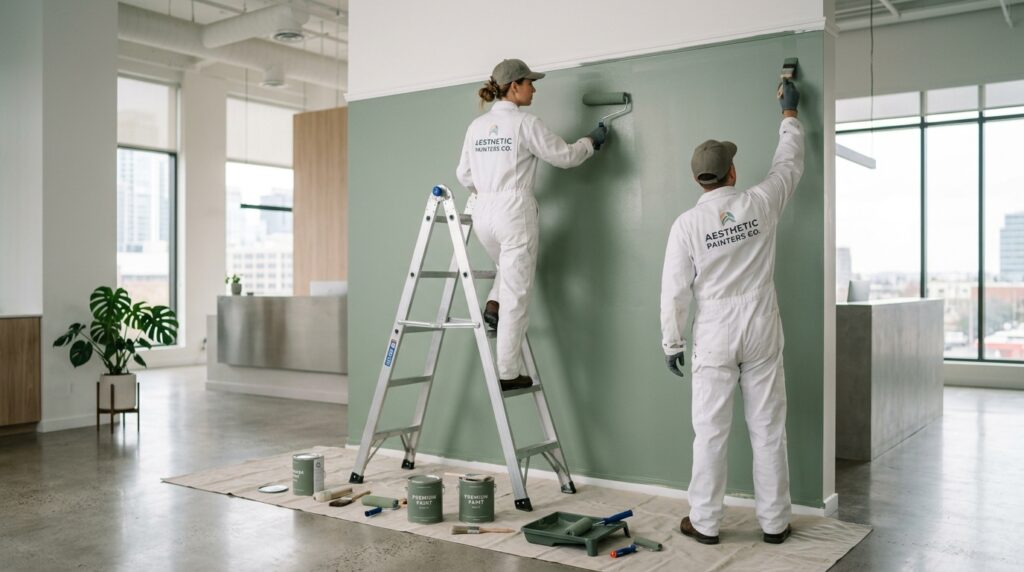
Melbourne’s shifting humidity and temperature affect interior paint more than people expect, even in a sealed office. Drying and cure times can stretch out during cooler, damper months, which matters when a job has to be finished and dry before staff return on Monday morning. Older buildings across the CBD and inner suburbs sometimes carry heritage overlays or original wall surfaces that need extra preparation before paint goes on. None of this needs to complicate the project, but commercial interior painters still need to plan for it rather than discover it halfway through.
What Commercial Interior Painting Costs in Melbourne
Cost depends on the size of the space, how much preparation the surfaces need, whether the job runs during business hours or after them, and how easy the building is for commercial interior painters to access. A single-level office with straightforward access will generally cost less than a multi-storey fit-out requiring lift bookings and after-hours labour. For a full breakdown of what drives commercial painting costs, our commercial painting costs guide covers pricing factors in more detail.
What to Look for in a Commercial Painting Company
A few checks make the difference between a smooth project and a stressful one. Confirm the company is licensed and insured for commercial work, and ask for a fixed-price written quote rather than a rough verbal estimate. Find out whether one person will manage the job from start to finish, since a single point of contact makes scheduling and problem-solving far easier than dealing with a different face each day. Ask what paint brands commercial interior painters use and whether those products suit an occupied commercial space.
At Sam Simon Painters, every job runs on a fixed-price quote, a dedicated project manager, and premium Dulux and Haymes products chosen for Melbourne conditions, backed by a written workmanship warranty. You can read more about our approach on our commercial painting Melbourne page, and about our background on our about us page.
The Master Painters Australia Victoria/Tasmania body sets professional standards for the trade and is a useful reference point when comparing painting contractors generally.
Frequently Asked Questions
Do commercial interior painters work after hours or on weekends in Melbourne?
Most commercial painters offer evening, overnight or weekend scheduling so the job doesn’t interrupt trading hours. It’s worth confirming this upfront and getting the proposed hours written into the quote, especially if the building has its own access restrictions outside business hours.
How is commercial interior painting different from residential painting?
Commercial jobs happen in occupied, operational spaces with staff, equipment and sometimes other tenants nearby. That means more planning around access, scheduling and disruption, along with products suited to spaces that stay in use, rather than the more flexible timeline of an empty house.
Do I need body corporate approval to repaint a leased Melbourne office?
Often, yes, particularly in strata-managed buildings where common areas or shared systems are affected. Check your lease and building management rules before booking the job, since approval and lift access can take longer to arrange than the painting itself.
What type of paint is used for occupied offices?
Low-odour, commercial-grade interior paint is the usual choice for occupied spaces, since it reduces the smell and disruption for staff and neighbouring tenants. The right product depends on the surface, the space’s ventilation and how quickly the area needs to be back in use.
How long does painting a Melbourne office typically take?
Timing depends on the size of the space, the amount of surface preparation needed, and whether work happens during or after business hours. A small office might take a few days, while a larger multi-room fit-out with after-hours scheduling will take longer to complete properly.
Is it worth hiring a specialist over a painter who also does commercial work?
It depends on the job. Genuine commercial interior painters understand scheduling, access and compliance in ways that matter for larger or multi-tenant projects. For a straightforward small office, a painter with a proven commercial track record, even alongside residential work, can still be the right fit.
Final Thoughts
Choosing commercial interior painters over a DIY job or a general handyman comes down to managing risk as much as improving appearance. A specialist understands how to work around staff, meet lease obligations, navigate body corporate requirements and deliver a finish that holds up under office lighting and daily wear. Getting it wrong, whether through rushed prep, the wrong products or poor scheduling, tends to cost more in lost time and redone work than doing it properly the first time.
If your Melbourne office needs a repaint that fits around your business rather than the other way round, Sam Simon Painters can help plan the job properly from the first conversation. Get in touch for a free, fixed-price quote and find out what a properly scheduled commercial repaint looks like for your space.