Scuffed corridors, marked reception walls and peeling paint near a kitchen pass are easy for customers to notice. Commercial wall painting is the preparation and repainting of walls in offices, shops, cafes, warehouses and other business premises. It differs from painting a home because the walls take more wear, get cleaned more often and usually need to be painted while the business keeps running. This guide covers what to check before you repaint, how to choose commercial wall paint for different areas, what suits kitchen walls, how walls should be prepared, what affects the cost and how to limit disruption.
What Should You Check Before Painting Commercial Walls?
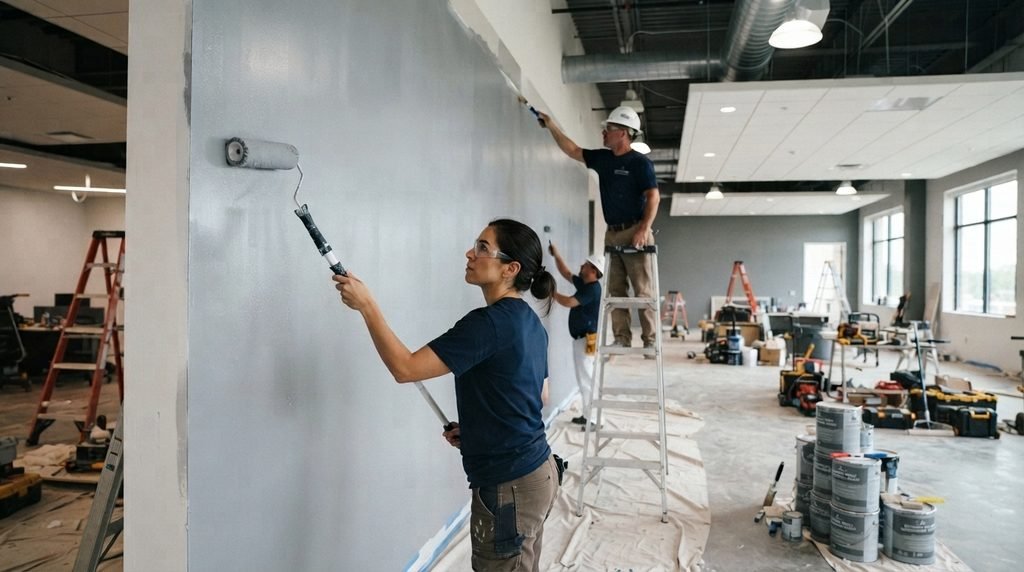
Start with what the wall is made of and what is already on it. Plasterboard, render, brick, concrete and previously painted surfaces all behave differently, and the existing coating affects which primer and paint will bond properly.
Then look closely at the surface:
- Scuffs, cracks, holes, peeling paint or stains
- Bubbling, dark patches or powdery marks, which can point to moisture
- How much foot traffic the wall gets and how often it is wiped down
- Whether the wall is in a public area, a staff-only area or back-of-house
If you see signs of moisture, find the source before repainting. Paint will not fix a leak or damp problem, and the new coating will fail if the cause is still there. A painter can flag what they see, but a building problem needs a qualified trade.
How to Choose Paint for Different Commercial Walls
The best commercial wall paint depends on the wall’s job. Compare options on these points:
- Washability and durability: How well the surface handles wiping and scrubbing
- Finish: Flatter finishes hide surface flaws but mark more easily, while higher sheen finishes clean more easily but show imperfections
- Traffic and cleaning: How often the wall is touched, bumped or cleaned
- Moisture exposure: Whether the room is dry, humid or prone to steam
- Colour, coverage, drying time and odour: These matter most when the space has to reopen quickly
Some practical examples:
- Office corridor: Trolleys, bags and shoulders leave marks, so a scuff-resistant, washable paint suits it.
- Retail wall: Appearance matters most, so colour consistency and an even finish are worth prioritising.
- Reception area: It is seen first and touched often, so choose a finish that cleans without burnishing.
- Warehouse office: Dust and knocks are common, so durability and easy cleaning matter more than a premium look.
No single paint is right for every setting. Ask your painter why a product suits your wall, and ask to see the manufacturer’s data sheet.
What Paint Is Suitable for Commercial Kitchen Walls?
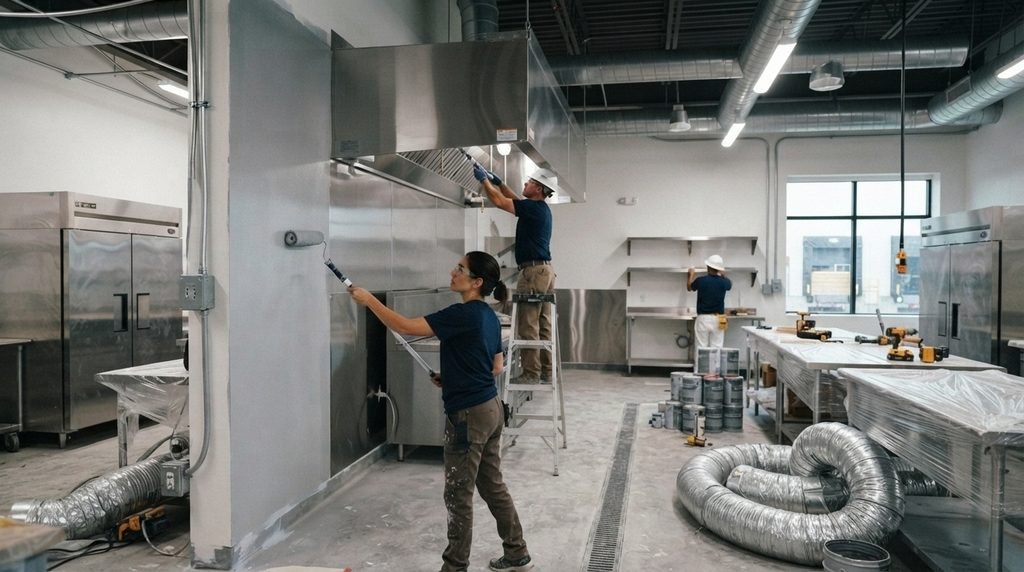
Kitchen walls face grease, steam, moisture and frequent cleaning, often with stronger detergents than the rest of the building. Paint that copes well in a corridor can stain, soften or peel in a kitchen within months.
When comparing commercial kitchen wall paint, look at:
- Resistance to repeated washing
- Moisture and steam tolerance
- A finish that wipes clean, which is usually a higher sheen
- Condition of the substrate, since damaged or porous walls need repair first
- Ventilation and drying conditions, which affect how the coating cures
The right coating depends on the wall material and how the kitchen is used. Requirements for food premises can vary, so check with your local council or food safety adviser rather than assuming a particular product is required.
How Should Commercial Walls Be Prepared Before Painting?
Preparation decides how well paint sticks and how the finish looks. For commercial walls, it usually runs in this order:
- Inspect the surface to identify the material and existing coating.
- Clean the wall to remove dust, grime and residue. In kitchens, degrease thoroughly, because paint will not bond over grease.
- Repair damage by filling holes and cracks and fixing flaking or damaged areas.
- Sand or key the surface so the new coat can grip, especially over gloss paint.
- Prime where needed, such as over bare patches, stains, repairs or porous surfaces.
- Allow drying time between steps, as rushing it can cause poor adhesion and an uneven finish.
Skipping any of these steps often shows up as peeling, patchy colour or marks bleeding through. Good preparation improves the result, but it does not guarantee a particular lifespan.
What Affects the Cost of Commercial Wall Painting?
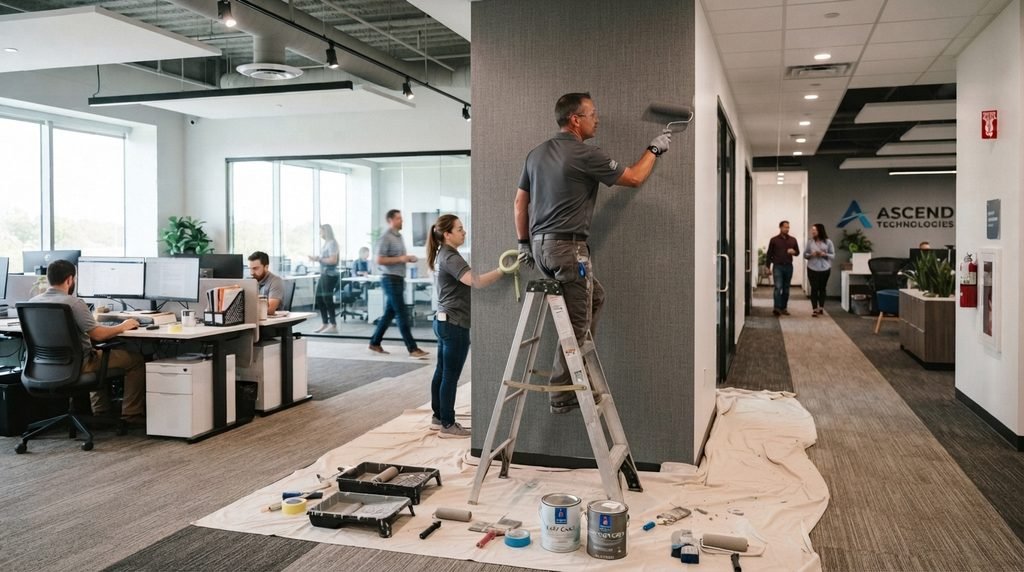
Commercial wall painting costs depend on the scope of the wall work rather than a fixed rate. The main factors are:
- Total wall area: More area means more paint and more labour.
- Wall condition: Heavy repairs, stains or failing paint add preparation time.
- Height and access: High walls, stairwells and tight spaces may need extra equipment.
- Furniture, fixtures and protection: Moving or covering items takes time.
- Coats and paint system: Primer, number of coats and product choice all change the total.
- Scheduling: After-hours or staged work to limit disruption can affect labour costs.
Because every site is different, a reliable figure comes from an inspection and a written quote. For project-specific pricing, see our commercial painting services page and request a quote.
How Can Businesses Reduce Disruption During Wall Painting?
A little planning keeps trading days running smoothly:
- Confirm which rooms and wall sections are included
- Move or protect furniture, stock and equipment where possible
- Agree on access, work hours and staging before the job starts
- Allow for drying and ventilation, particularly in kitchens and enclosed rooms
- Confirm how the area will be cleaned and handed back
The painter you choose should also understand your wall type, the preparation it needs and the paint system that suits it. For broader hiring advice, read our commercial painting contractors guide.
Commercial Wall Painting in Melbourne
Sam Simon Painters carries out commercial wall painting for Melbourne businesses, from offices and retail spaces to kitchens and warehouses. Each project starts with an inspection of the walls so preparation, products and coats can be set out in a written quote.
Frequently Asked Questions
1. What is commercial wall painting?
It is the preparation and painting of walls in business premises such as offices, shops, warehouses, cafes and factories, using paint suited to heavier wear and regular cleaning.
2. How do you choose paint for high-traffic commercial walls?
Look for a washable, scuff-resistant paint with a finish that suits how the wall is used and cleaned. Check the manufacturer’s data sheet for the specific surface.
3. Do commercial walls need primer before painting?
Not always. Primer is typically needed over bare or repaired surfaces, stains, porous walls or when changing between very different coatings. Your painter should confirm based on the wall.
4. What paint features matter for commercial kitchen walls?
Washability, resistance to moisture and grease, an easy-to-clean finish and proper surface preparation. Suitability depends on the substrate and conditions.
5. What affects the cost of painting commercial walls?
Wall area, condition and repairs, access, protection of furniture, number of coats, paint system and work scheduling.
6. How can a business prepare its walls and rooms before painting?
Clear or cover furniture and equipment, agree on access and work hours, note any damaged areas and confirm drying, ventilation and clean-up arrangements.
Final Thoughts
Good commercial wall painting starts with understanding the wall: its material, condition and daily use. Preparation then sets up the finish, and paint chosen for the room’s traffic, cleaning and moisture gives it the best chance of lasting. If you are planning a project and want to talk through your walls, contact Sam Simon Painters to discuss the work or request a quote.