Introduction
Does your fence look old, rotten and worn, dragging the first impression of your house down the street? A well-maintained, freshly painted fence can significantly help with carrying your kerb appeal through to your property value, and this protection results in lower costs down the line, yet many Australian homeowners underestimate just how useful this is. Fence painting from the professionals secures your boundary against vandalism due to UV radiation, moisture, rust and simple weathering whilst significantly improving the visual beauty of your house. SamsimonPainters are your trusted Melbourne fence painting team who keep our word and provide you quality fence jobs by preparing it for each project, meticulously applying products and delivering premium results.
Fence paint quickly fails without cleanliness, good priming and the correct coating system so that bare surfaces often have increased exposure to deterioration compared to not being painted at all. Anything you want to know as an Australian homeowner about professional fence painting will be found in this guide, including colour selection and specific techniques for different materials and, weighted towards the end, cost expectations as well as the distinct advantages of hiring seasoned professionals.
How Fence Painting Protects and Enhances Your Property
The act of painting a fence results in a barrier that completely waterproofs the wood, as well as the steel and also Colorbond secure fencing systems, from moisture invasion, UV degeneration, rust formation, downy mould development, mud growth and relatively damaging Australian outside environment surface area deterioration. Understanding the complete protective function of expert fence portrayal helps Australian householders view it as a swell lengthy-term maintenance sell, no longer simply a kitchen improvement.
Regularly painting fences also plays a big part in your property’s overall image and value as well as contributing to its status within the surrounding area by showing people notice that this property is being kept up. Regularly completed fence painting avoids progressive surface wear that makes fences progressively more expensive to repair as damage permeates the surfaces and deteriorates further, leading to problems beyond the point where simple fence painting will remedy the issue.
Benefits of Fence Painting for Long-Term Durability
- Ultraviolet protection — good-quality coatings overcome the solar radiation that causes chemical degradation of surfaces and rapid colour fading
- Moisture resistance — sealed surfaces keep water from getting into the insulation, resulting in rot, rust, and structural decay
- Biological growth control — most protective coatings prevent the growth of moss, lichen and mould that attack unpainted surfaces
- Longer life span of the fence – Professionally painted fences have a much longer life span than untreated options.
Common Fence Damage Without Painting
Timber fences that are unpainted, or even poorly painted, are extra susceptible to the ravages of decay in addition to warping and cracking due to the changing patterns of heavy moisture and vagaries of temperature typically experienced across a year in Melbourne. In coastal areas or those with high humidity, metal fencing without sufficient protection forms rust quickly, creeping underneath any remaining paint layer and destroying the structure to the point where repair becomes prohibitively expensive. Whether from the damaging effects of moisture, algae or sunlight through things like shrinking and swelling or bleaching, these deterioration mechanisms are prevented through fortifying your fence with regular professional service.
Painting Colorbond Fence – What You Need to Know
The way to paint Colorbond fence surfaces is very specialised and fundamentally different from how you would carry out timber fence painting, as steel expands and contracts with temperature changes, so it requires flexible coating systems with specific adhesion requirements. Standard exterior house paint used to coat a painting The Colorbond fence project fails miserably here — peeling and blistering during the first season as the steel surface moves under, over, behind, twelve, on top of – yeah – each other, coating that has no ability to flex for its thermal expansion.
Experienced Colorbond restoration professionals with appropriate spraying equipment and expertise to deliver a factory finish for fence painting contractors’ recipes that will stand the test of time with the weather conditions outdoors in Melbourne. The most crucial hiring decision relevant to any steel fence restoration is which team of fence painting professionals you choose.
Steps for Painting Colorbond Fence Properly
- This involves pressure washing the whole surface of the fence to remove dirt, mould and old chalky residue
- Use a sandpaper or anything to identify the oxidized areas and expose them; this would yield a flat surface for primer application
- Treat any rusty areas and allow to dry properly before you start priming
- Priming The Entire Fence Surface Using Either A Specialist Metal Adhesion Primer
Common Mistakes in Colorbond Fence Painting
- No primer — primary reason for rapid coat-finish failure on metal surface on a fence
- Choosing incorrect paint type — Regular exterior paint is not flexible for thermal metal movement
- Coating that is neither too thick nor too thin – Nonuniform thickness due to improper spray distance or pressure adjustments
- Poor weather conditions for painting – Coatings applied in excessive heat or high humidity can lead to loss of adhesion.
Choosing the Right Fence Paint Colours for Modern Homes
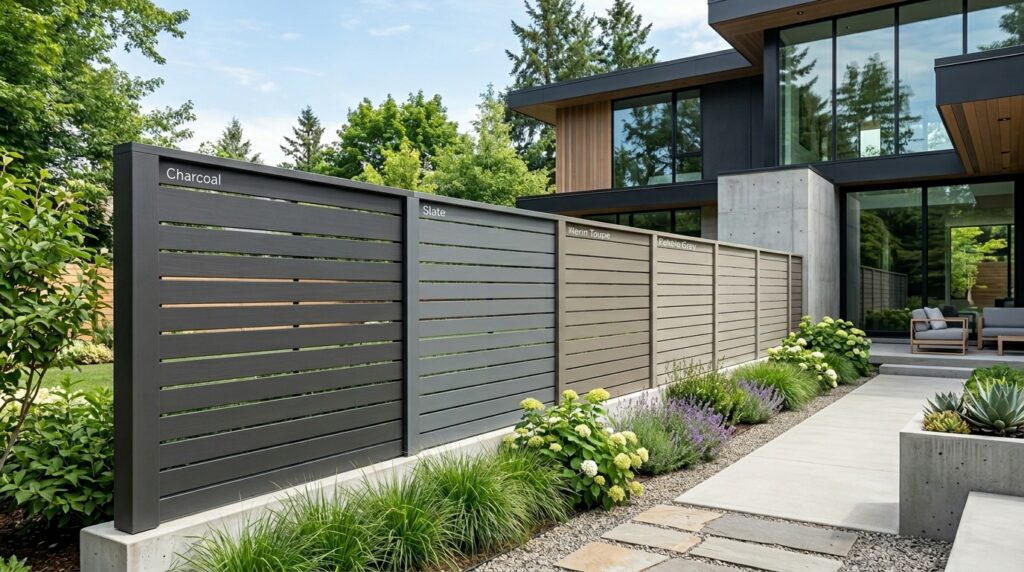
The colour of the paint you pick for your fence has a major effect on how your entire place looks when viewed from the street, serving to either provide visible balance between the colours painted onto and created by your palms, roofline and cell wall tones. With the right colours, you create a total exterior presentation; it works with your property for great kerb appeal — while poor fence paint colours make even a well-maintained home look as if its parts were thrown together haphazardly and poorly designed.
Gone are the days when Australian homeowners often settled on fence paint colours to blend in with their choice of home or left selecting their palette for their fencing until last: modern homeowners opt for more sophisticated, architectural fence paint colours that suit the exterior design trends. Charcoal, monument, sage green and warm white are some of the most common fence-painting colour choices around well-defined residential Melbourne suburbs, from modern homes to heritage houses.
Popular Fence Paint Colours for Australian Homes
- Charcoal & Monument — strong, architectural colours that work well with modern homes and streetscapes
- Warm white and off-white — an eternal and light-filled color for heritage and classic Australian home styles
- Sage, forest green — earthy, soothing shades that are trending big time among Melbourne’s suburbs
- Natural toned timber finishes — stains and semi-transparent coatings that accentuate the natural grain character of timber
Matching Fence Colours with Exterior Design
Selecting a hue from the same colour family as your roofline or exterior wall tone — two to three shades darker or lighter — creates a deliberate flow that looks right, not random. When your fence colour complements the main shades in your garden, along with the surfaces of your driveway, pavement and gate too, you are left with a poolside exterior that appears designer, descended from the kerb. Such contextual factors before a final colour decision is made are always addressed by a professional fence-painting colour consultation.
Fence Painting Methods – Spray vs Brush vs Roller
| Application Method | Speed | Finish Quality | Best For |
|---|---|---|---|
| Spray Painting | Fastest | Excellent | Large fences, Colorbond fencing |
| Roller Painting | Moderate | Good | Flat fence surfaces |
| Brush Painting | Slowest | Good for detail work | Small areas and touch-ups |
| Professional Spraying | Very Fast | Premium finish | Most residential projects |
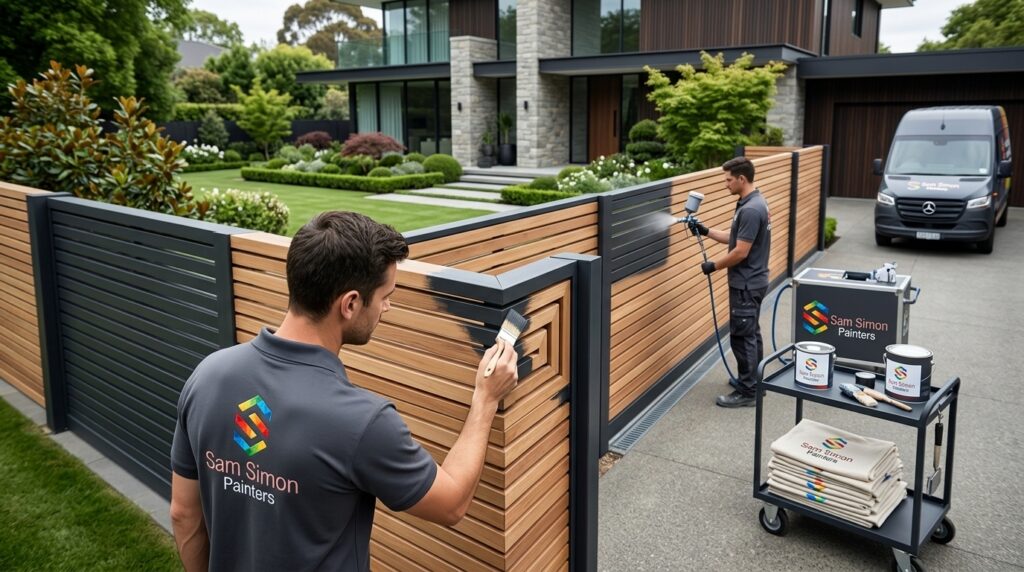
Whether you’re spraying timber palings, Colorbond panels, metal pool fencing or decorative garden borders, a professional fence paint sprayer gives you the fastest and best coverage that is also the most consistently even. The fence paint sprayer emits a fine mist that fills every surface space, grain and texture in one controlled pass for full coverage that brush and roller application methods missed on complex fence profile(s) time and again.
Applying spray paint to a fence with a good-quality airless or electric sprayer is the long-fencing professional technique, as the efficiency and finish advantages of this method are dramatic over brush and roller on any fence longer than a few metres. For almost all residential fence painting jobs in Melbourne, spraying is the best option to get maximum efficiency and quality results.
Using a Fence Paint Sprayer for Fast Results
- Quicker coverage — entire fence lines done within hours, as opposed to days with manual techniques
- Painted surface — finished smooth and even, free of brush marks or evidence of roller texture
- We’ll get deeper penetration — we’ll spray into those gaps, into the grain and onto textured surfaces as well that manual methods miss consistently
- An even layer which results in consistent thickness across every paling, every rail and post, run through the entire fence
Spray Paint Fence Technique for DIY Projects
Use smooth, horizontal passes from left to right, covering roughly 50 per cent of the previous pass, giving you an even coat throughout, ensuring that you keep a consistent distance of 25 to 30 centimetres away from your fence face. Instead, use two coats built up wet on wet rather than risking a big drip — especially with vertical surfaces, as lots of wet film wants to sag before the paint film can settle. Test all of your spray-paint fence settings, such as pressure, distance and speed, on a scrap board before painting the actual fence so you can ensure that each setting makes it look pretty.
Timber Fence Paint – Best Practices for Wooden Fences
One of the key decisions that you will face in any wooden fence painting project is the selection of timber fence paint, as different species, ages and condition types react differently with different paint and stain products. The correct timber fence paint will seal the wood from moisture, UV radiation and biological growth while allowing the timber to breathe as well as facilitating natural expansion and contraction that all wood experiences with variations in humidity and temperature. But the wrong fence paint — especially water-based products on very porous timber or timber that has previously been treated with oil — results in quick adherence failure and a coating that peels off within months of applying it.
It is this preparation — cleaning, sanding, not treating mould/biological growth, or primer application — that eliminates the new timber fence paint from delivering its expected service life to failing prematurely within a few seasons.
Preparing Timber Before Painting
- A stiff brush and scraper is used to eliminate every loose, peeling coatings, or other surface debris
- Power wash the entire fence surface, wait minimum from 48 hours to paint.
- Sanding details: sand with 80 to 120 grit sandpaper graffitied surfaces, previously painted areas with rough surface and grainy paint should be sanded
- Biocide treatments for mould or lichen are treated and allowed to dry completely after treatment.
Best Timber Fence Paint Finishes
- Matte and low-sheen finishes — natural, laid-back appearance perfect for garden facing and rear boundary fences
- Later in HP S Semi-gloss protection -> expected moisture resistance for north and west-facing fences with high exposure
- Natural wood stain — semi-transparent finish that accentuates the grain of timber as well as providing surface protection
- Solid colour paint — full cover in a whole shade for modern or high-contrast fencings
Fence Painting Cost in Australia – What to Expect
| Fence Type | Average Cost Per Linear Metre | Typical Lifespan After Painting |
|---|---|---|
| Timber Fence | $15–$30 | 5–10 years |
| Colorbond Fence | $18–$35 | 7–10 years |
| Metal Fence | $20–$35 | 5–10 years |
| Decorative Fence | $25–$40 | Varies by material |
| DIY Painting | $5–$15 (materials only) | Depends on preparation quality |
In Australia, the cost of fence painting depends on 5 main factors: the length of the fence, its material type and condition, the quality/type of paint product(s) used on it by your Melbourne professional team member, and lastly how they apply them. Based on these factors, most Melbourne homeowners will have to budget for between $15 – $35 per linear metre for a pro to paint their fence, with longer well-kept fences providing better value $$$-wise than shorter fences in the need of more prep.
If you prefer to do it yourself, fence painting price may look appealing at first glance, but when equipment hire ($80), product waste from downtime for not applying the paint correctly and not forgetting the time it takes too, a realistic perspective on DIY reveal that they actually cost more! A professional fence painting team takes less time, uses the right products for each specific surface type and produces a result that will last much longer than most DIY jobs — making the professional fence painting price a far better investment for many Melbourne homeowners.
Factors That Affect Fence Painting Cost
- Fence length and height — total paintable surface area is the largest contributor to labour and material costs
- The quality of paint — high-end, UV-resistant products are price-intensive in the initial purchasing phase but have much longer lifetimes
- Christine Gibbons shPhtsN2E7 Q roRJ Surface condition — bad decks that need a lot of work will increase overall project expense
- Application method — faster but needs masking (spray), slower but easier (roller).
DIY vs Professional Fence Painting Services Cost
Hiring a professional to paint your fence costs more upfront than doing it yourself but the prep work, application of premium products and finish will outlast a DIY job needing replacement coat three to five years sooner. As a general rule, DIY fence painting makes the most sense for relatively short fence sections in good condition where preparation work is minimal and equipment costs are affordable. Outside of not quite tackling a fence that is more than twenty metres long or one that has deteriorated significantly, professional fence painting price nearly always beats the total value compared over the ownership cycle to repeated DIY with severity on prep.
Frequently Asked Questions
What are fences painting and why is it important?
Fence painting provides weatherproofing, aesthetic improvement, and longevity to wooden fences.
Tips & information regarding the costs of painting a fence in Australia.
Fence type, material, desired paint and preparation work influence costs.
Ideal fence paint colours for houses
There are many options with colour still very popular as charcoal, black and grey tones as well as natural timber making their mark.
Is it fine to paint a fence somewhere with spray paint?
Yes, the spray paint fence method ensures maximum coverage and is one of the easiest ways to color in what you’re looking for if done right.
How long will fence paint last?
Paint of a superior quality can last anywhere from 5–10 years, depending on sunlight exposure.
Do I need to hire professional fence painters instead?
Well actually yes, a professional will guarantee bettter durability better finish and weather resistance.
What does fence painting Melbourne included?
May involve cleaning, preparation, priming, painting and finishing.
Is a primer required before painting a fence?
Check out this primer- yes, primer helps adhesion and strengthens paint durability.
Final Thoughts
For any Australian homeowner desiring a fence that looks immaculate, functions well for years into the future and adds real value to their home rather than detracting from it through decay and lack of care, professional fence painting is certainly worth the expense. Whether that be natural timber fence paint tones, biting modern fence painting colours for your Colorbond steel fence, or a professional spray paint fence application for fast-efficient and quality cover, the all-important common factor is always preparing correctly, using the right product and skilled application. Full scope of fence-painting impact over the years – steeped in DIY, penniless practices or even questionable ones can be refused for just about every Melbourne home owner to justify calling a professional fencing company you want to hire when you understand real, honest, and upfront yet always cheap wall-fencer item.
Why sacrifice the aesthetic and monetary value of your Melbourne property to an unkempt fence when expert assistance is out there? Call the reliable team at SamsimonPainters for fencing painting services and tips and excellent results to protect and beautify your house for many years. Now that you know it matters to have a professional fence painting for your Australian property, are you ready to give your fence the just-right durable and beautiful finish? Request a FREE Quote from Samsimonpainters here →