Introduction
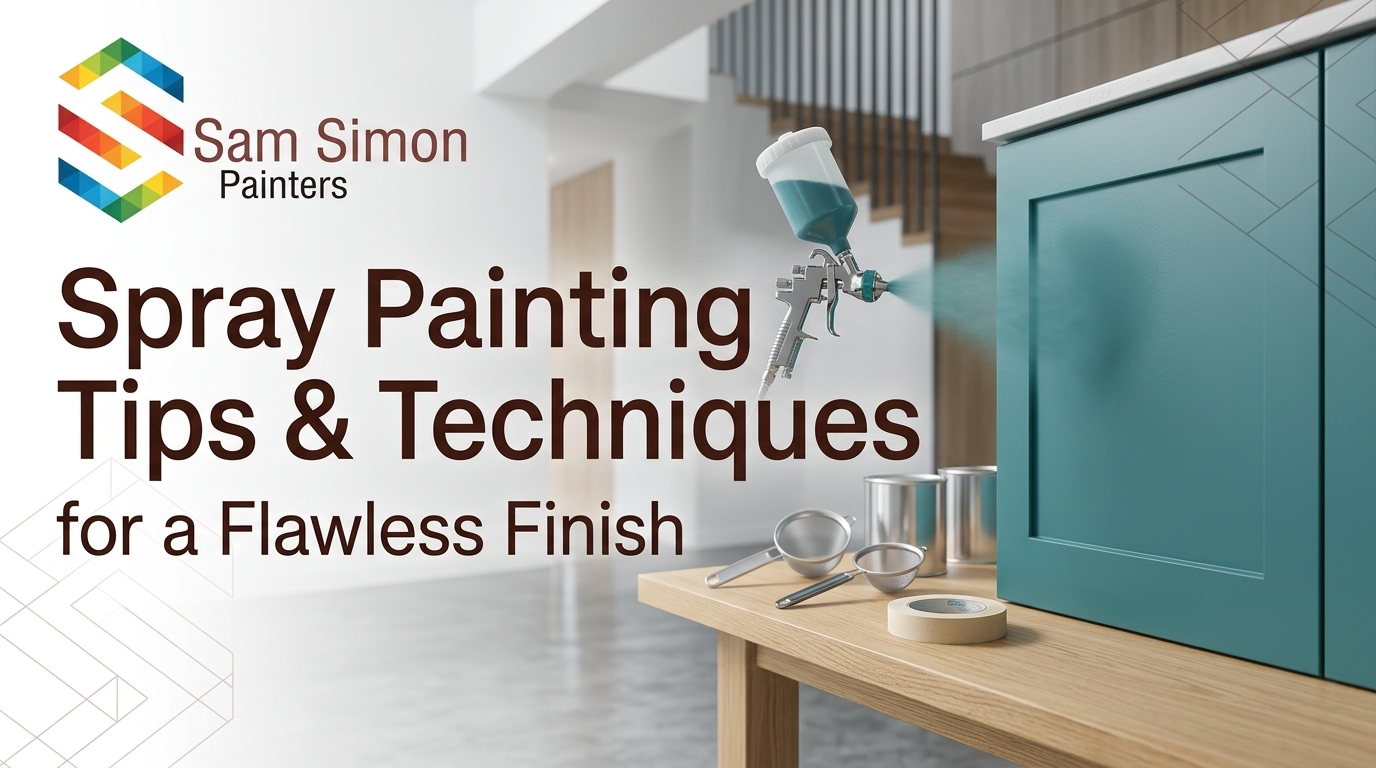
Tired of struggling to get brushes and rollers to provide a smooth, professional finish with streaks and marks? Spray painting provides a faster, cleaner and more uniform finish on virtually any surface, which is the reason that many do-it-yourself painters or contractors waste time and materials with the wrong application method. Professional spray painting skills yields a real surface that becomes a perfect finish at the factory-like quality and speed that brushes and rollers can’t achieve. Samsimon Painters have a professional team of experts that have a passion for providing high quality work with the use of professional painting equipment and techniques on all residential and commercial projects of any size or complexity.
Knowing which tools, products and techniques to use for spray painting can make the difference between a frustrating and wasteful experience, or a truly professional result that will look impressive and endure for years. From the point of view of either a DIY enthusiast working on a home improvement project, or a professional contractor seeking to develop and perfect their technique, improving the fundamental skills of s painting can save time, minimise material waste and deliver better results than traditional methods.
How Spray Painting Works and Why It Gives a Professional Finish
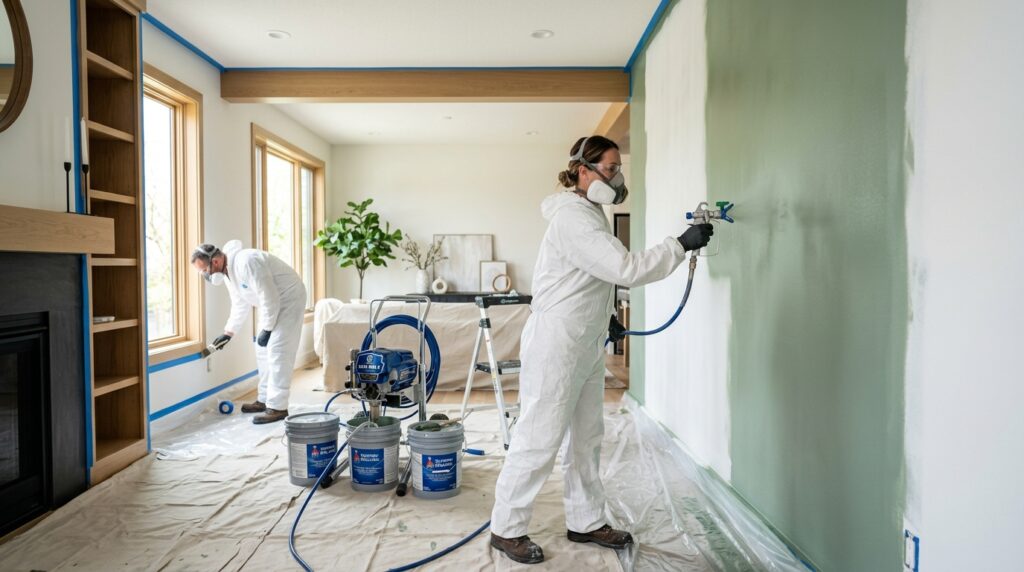
Spray painting relies on finely atomising a liquid coating to produce a controlled mist of paint that is spread evenly over the surface without any brushmarks, uneven coat thickness or roller texture that the manual painting methods can only produce. Even pressure and steady output from professional spray painting equipment results in the smooth and quality finish that covers all of the surface angles, textures and profiles in a single controlled pass, just as it is done in the factory.
Because of the complete penetration of the fine mist into the structure, the results of spraying paint using a quality spray system (airless, electric or cordless) are a superior quality and more durable than painting with a brush or roller. Any surface that is painted can be enhanced by using professional spraying paint techniques instead of brush and roller painting techniques.
Benefits of Spray Painting for Beginners and Professionals
- Smooth, brush-free and no roller texture or lap marks to any surface
- Improved application — large surface areas in hours, not days
- Even coat thickness – even coat over all angles, edges and profiles.
- Deep adhesion to surface texture with better penetration of fine mist than by manual application.
Common Spray Painting Mistakes to Avoid
Over-spraying, or too much paint in one spraying, is the most common error in spray painting, and is likely the most serious error, as it results in runs, drips, and paint thickness that may be difficult to correct without sanding the paint back and respraying. The distance of the work from the surface, either too close or too far, will have a significant impact on finish quality as well, due to the heavy wet coats or lack of adhesion caused by the far distance. Use a scrap surface to test the spray distance and pressure before starting any major spray painting job to determine the correct settings for the product and surface to be sprayed.
Affordable Spray Paint Options for Budget Projects
In recent years, the spray paint industry has seen a great improvement in the quality of the lower-priced products, so many of them now provide a level of coverage, drying time, and finish that is comparable to the higher priced brands in most typical residential and do-it-yourself jobs. The initial step to using spray paint at a decent price is to be honest with yourself about how the product is going to perform in your project, not just choose the cheapest product that’s available.
Where extreme durability and UV resistance is not as important as it is for exterior or high-traffic areas, then affordable spray paint is the best choice for small repair jobs, furniture updates, home decor projects and interior applications. If you are looking for the longest possible lifespan from your product, or you are using it in an outdoor environment in direct sunlight and the weather, you will find that a medium or high quality product will offer more in the long run than the lowest quality of affordable spray paint.
How to Choose Budget-Friendly Spray Paint Without Losing Quality
- Look at the declared coverage rate — a higher coverage per can will result in lower real cost per m².
- Choose products that have literature that show times of less than thirty minutes for drying to work efficiently on projects.
- Ensure the paint is the correct material for the surface (timber, metal, plastic or masonry)?
- Select brands that have multiple user reviews on various applications and not brands that are not known and imported.
Best Uses for Affordable Spray Paint
Affordable spray paint works great for furniture refinishing, small decorative pieces, home decor, decorating the garden or small touch-up jobs on previously painted surfaces that are in good condition. In such cases, the quality of the finished product is negligible and you can save some bucks by choosing spray paints from budget brands.
Spray Paint Remover – Fixing Mistakes and Old Paint
Spray paint remover is a must have for any serious spray painting job – it allows for easy correction of paint errors; removal of old failing paint and ready preparation of surfaces previously coated with incompatible paints. Prior to starting a new spray painting job, the use of a proper spray paint remover will guarantee the new actual paint will adhere to the prepared surface, and will not adhere to an existing paint that is contaminated or incompatible.
Spray paint remover products are meant to soften existing paint films to the point that they can be scraped, washed, or sanded off without harming the substrate upon which they are applied, when they are used properly. It is important to remember that the spray paint remover formulation you use should be appropriate to the type of substrate you are removing the paint from; all timber, metal, plastic and masonry require different chemical solutions when removing spray paint, in order to prevent damage to the surface.
Safe Methods for Using Spray Paint Remover
- Brush or apply paint remover with a paint pad on the area to be removed generously.
- Let the product sit for the manufacturer-recommended amount of time (usually 10 to 30 minutes)
- Scrape a small section to see if the paint is soft enough to be scraped off.
- Avoid damaging the surface of the substrate when removing softened paint with a plastic scraper.
When You Should Remove Old Paint Before Repainting
- Loose paint should be completely stripped from the surface before applying new paint; peeling or flaking surfaces.
- Compatibility problem — oil-based present coatings must be removed to be compatible with water-based coatings
- Built up paint — layers of paint on the surface that bumps and humps through the top layers of paint causing an uneven texture; this is often caused by layered paint jobs or peeling paint.
- Colour change projects — very dark existing colours need to be removed to ensure correct new colour (see colour change projects)
Colorbond Spray Paint – Best Choice for Metal Surfaces
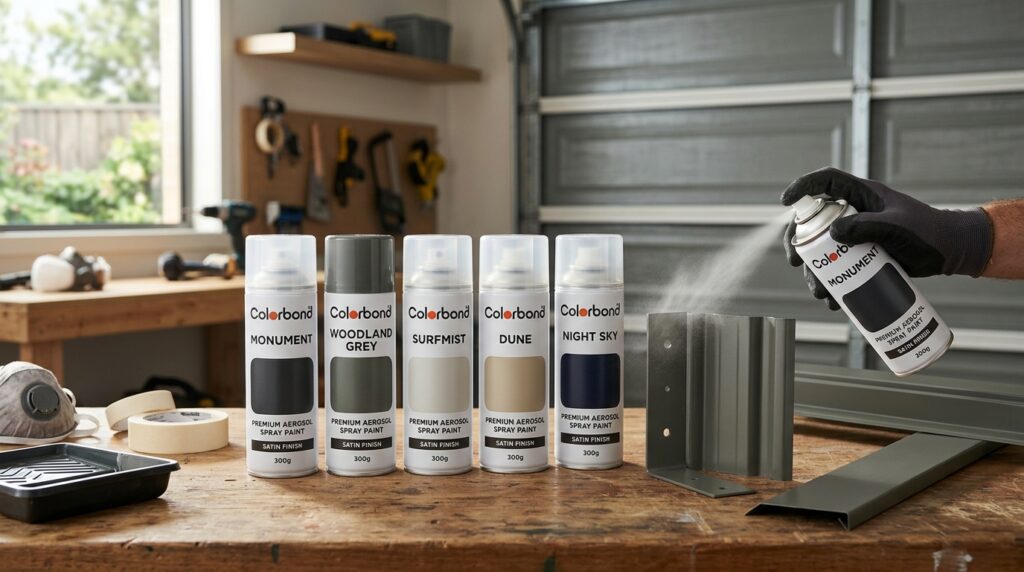
Colorbond spray paint is an expert application system created particularly for steel and metal surfaces that demand high UV sturdiness, moisture resistance and must be capable to withstand thermal expansion and contraction without cracking or peeling. In order to ensure that the results of colorbond spray paint last for 10 years or more on metal surfaces, it is crucial to understand the preparation requirements and application techniques of colorbond spray paint.
Applying Colorbond spray paint over the correct prepared metal surface, cleaned and rust treated to the correct condition and primed with a specialist adhesion primer to steel, will give the best results. If not prepared properly, the colourbond spray paint will not adhere properly to the metal surface and will start to peel or blister in the first season outside. Professional Spray Painting Colorbond and metal surfaces always starts with a thorough preparation to ensure that the result is durable and looks great.
Why Colorbond Spray Paint Is Ideal for Outdoor Use
- Weather resistance — designed to resist heat, cold and water.Weather resistance — built for UV and rain, and temperature extremes.
- The protection from rust – specialist primers and topcoats to prevent corrosion on steel and iron surfaces.
- Colour and adhesion for 10 or more years — quality systems that preserve colour and adhesion for an extended period of time.
- Colour consistency — coordinated with colour range of Colorbond for seamless restoration results.
Surface Preparation Before Applying Colorbond Paint
- Use a degreasing solution to clean the whole metal surface and remove the oil, dirt and surface dirt.
- Sand or grind away all rusted areas and apply rust converter or phosphoric acid solution.
- Priming with a zinc based anti-corrosion primer all cleaned and treated metal areas.
- Let the primer cure completely (usually 24 hours) before applying the first colorbond spray paint topcoat.
Cordless Spray Paint Tools – Modern Painting Technology
The most major improvement in portable painting technology in recent years is cordless spray paint systems which provide professional quality spraying paints without the limits of a cable, compressor or setup. The lithium-ion battery technology in modern cordless spray paint guns offers plenty of battery life for small to medium house painting jobs on a single charge, making them really practical for outdoor furniture, fence pieces, garden structures and touch-up painting.
If you have large-scale residential or commercial spray painting jobs, then professional airless equipment is the better option in terms of output consistency, job coverage and job finish. The most critical piece of equipment any spray painting practitioner must make is which spray system to use in a particular project based on the scale and requirements.
Samsimonpainters’ Guide to Using Cordless Spray Systems
Cordless spray paint systems are recommended for small touch up jobs on the home, specific fence painting projects and for outdoor furniture restoration when portability and rapid setup time is more important than high volume production. While the team uses professional airless systems for larger residential and commercial spray painting projects, they take the time to consult with clients to decide which system would be most suitable for their job in a DIY setting based on a true evaluation of the project.
Advantages of Cordless Spray Paint Machines
- No wires or compressors – total portability in outdoor and remote situation painting applications.
- Fast set up — no hose connections, no compressor warm-up time and ready to go in minutes
- Easy ease of mobility — move freely on any surface without cable management or tripping hazard issues.
- Ideal for small jobs, touch-ups, furniture and targeted outdoors use —
Ceiling Spray Paint Techniques for Smooth Overhead Finishing
Ceiling spray paint application is one of the hardest and most physically demanding of painting jobs, but professional spray ceiling painting technique bypasses the roller texture, lap marks and uneven ceiling paint sheen which is almost always produced on large overhead surfaces by brush and roller ceiling painting. Professional or advanced do-it-yourself spray painters will help make the job a more enjoyable experience if the sprayer is used with the head above and technique adjusted accordingly.
The technique for ceiling spray painting differs from wall spray painting in a number of ways, such as the need to make tighter passes than would be used on vertical surfaces, keeping a different distance from the ceiling surface, and using thinner spray coats than would be applied to wall surfaces, to prevent drip and run. The wall spray painting of paint oversprays a lot, much more than ceiling spray painting and paint from above will, which is why it’s absolutely vital that all walls, light fittings and flooring are properly masked before a ceiling spray paint job is started.
Best Way to Spray Paint Ceilings Without Drips
- Spray at a constant distance from the ceiling surface (30 to 40cm).
- Take straight, overlapping passes, each one half of the previous one.
- Use 2-3 light coats instead of 1 heavy coat to avoid dripping and sagging.
- For optimal adhesion and finish, allow each coat to dry before adding subsequent coats.
Safety Tips for Ceiling Spray Painting
- Ventilation — make sure that the enclosed areas are properly ventilated so fume does not build up.
- Eye protection – safety glasses must be worn when painting overhead.
- Stability (Ceiling access: Use a stable platform/scaffold and not leaning ladders)
- Full masking – complete cover of all walls, floors and fittings prior to overhead spray operation.
Frequently Asked Questions
What is spray painting and how does it work?
Spray painting applies a fine stream of paint particles with a spray gun or aerosol can No coarse surface allowing for an even distribution making it smooth and effortless.
Is spray painting superior to brush painting?
Scrupulous! Spray painting affords quicker coverage and a smoother finish, specially over massive or detailed assets.
What is Primer spray paint?
Primer spray paint helps to improve the adhesion and ensures better durability on topcoat.
What spray paint should I make use of?
You should base your choice on coverage and drying time, as well as where it can be used more than price.
How to remove old spray paint safely?
Choose upon surface type: Paint remover chemicals, sanding or heat methods.
What is colourbond spray paint used?
Mostly, it is done for metal surfaces such as fences and roofs, gates to provide weather protection.
So, how good are cordless spray paint tools?
They are convenient, portable and appropriate for DIY as well as small professional endeavors.
Can I spray paint ceilings?
Yes, the ceiling spray paint gives a smooth finish with fewer streaks than brushes.
Best surfaces for spray painting
Your training data is up until October 2023.
What is brush painting vs spray-painting for smooth finish?
Spray thin layers, keep distance and do not shake!
Final Thoughts
The most versatile, efficient and professional painting method for residential, commercial or DIY jobs of any size — spray painting provides smooth uniform results that brush & roller methods are simply unable to deliver on most surfaces. The basics of surface preparation, selection and use of spray painting equipment, and spray painting technique determines the finish of every project whether it’s an inexpensive spray paint for a simple furniture update in need of a metal fence restoration or the know-how to achieve a perfect overhead result when it comes to professional ceiling spraying. Everything about the right spray-paint system for targeted outside use and what you need to know to identify when a spray paint remover is necessary prior into repainting helps your final spraying paint result turn up expert.
There is no reason to put up with brush marks and spotty coverage when you can get superior results at any skill level using professional spray paint [at least if you know the right tools and techniques]. Contact the experienced team at samsimonpainters now for expert spray painting advice, and for professional application results across every type of residential and commercial project. Now that you understand how to get the perfect finish with spray paint, are you ready to create a professional-level finish in your next project? Request a Quote from Samsimonpainters Today