Introduction
Spray painting gives doors, fences, cabinets and walls a smooth, even finish, but the result depends on what happens before any paint leaves the gun. Preparation, masking and curing time decide whether a job looks good for years or starts to fail within a year or two.
This guide walks through a typical job from first inspection to final walkthrough. It also covers the surfaces that suit spraying, how paint types differ and how a good finish supports property value. If you’re comparing spray painting services in Melbourne, it will help you ask the right questions before you book.
What Spray Painting Involves
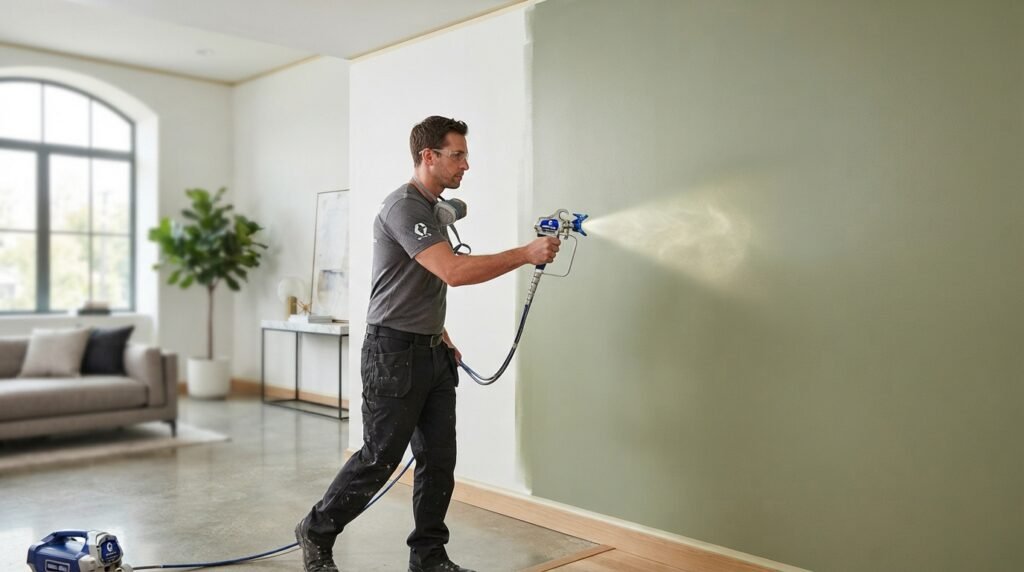
Spray painting applies paint as a fine, controlled mist using pressurised equipment. The mist settles as a thin, even film, which is why sprayed doors and cabinets can look factory-made.
Two types of equipment do most of the work. Airless sprayers force paint through a small tip at high pressure, which suits fences, exterior walls and ceilings. HVLP (high volume, low pressure) systems use more air at a gentler pressure, giving the painter finer control on cabinetry and joinery.
Neither is the same as an aerosol can. Hardware store cans are fine for a letterbox, but professional spray painters use purpose-built rigs, properly mixed coatings and a lot of preparation around the spraying itself.
The Process, Step by Step
Every painter has their own habits, but a well-run job usually follows this order.
Inspection and planning. The painter checks what the surface is made of, what condition it’s in and what’s already on it. Timber, MDF, metal, render and old gloss finishes all need different handling. Colour, sheen and the coating system are chosen at this stage.
Cleaning and repairs. Grease, dust, chalky residue and mould stop new paint from bonding. Surfaces are cleaned, then cracks and holes are filled and left to cure.
Sanding. A light sand gives the coating something to grip. It’s the step most often skipped, and it’s invisible once the job is done, so ask about it.
Masking and protection. Spray mist travels, so floors, windows, hardware, neighbouring walls, plants and cars get covered. On many jobs the masking takes longer than the spraying. Good spray painters put real time into this stage because it keeps the edges clean.
Priming. Primer helps the topcoat stick, blocks stains and tannin bleed from timber, and evens out how much paint the surface absorbs.
Spraying in thin coats. The painter works in steady, overlapping passes at a consistent distance. One heavy coat causes runs and sags, so most projects get at least two topcoats with drying time between them.
Drying and curing. A finish can feel dry in hours but take days, sometimes weeks, to fully harden. Your painter should tell you how gently to treat the surface in the meantime.
Final walkthrough. The masking comes off and the work is checked in good light. Touch-ups are done and the site is cleaned.
Surfaces That Suit Spray Application
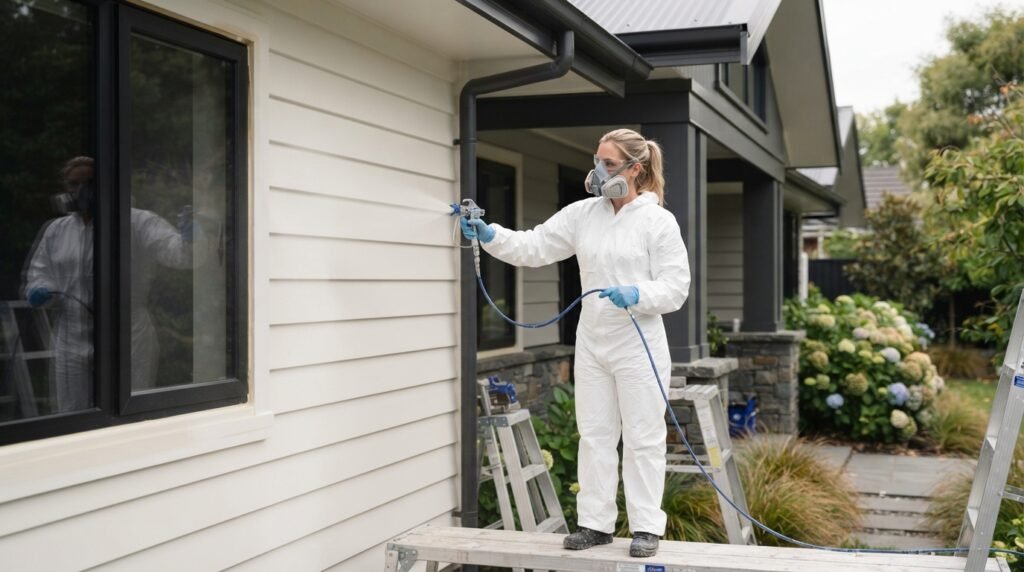
Professional spray painters can work with a range of surfaces, provided the correct preparation and coating system are used.
Interior doors. An interior door spray painting service usually starts by removing the doors from their hinges, along with handles and latches. The doors are laid flat or hung on a rack so every face and edge is coated evenly. You can choose matte, satin, semi-gloss or high-gloss, and match the colour to your trim or a new scheme. Removing the doors and spraying them in a controlled area can help reduce overspray and disruption inside the home. [Link to your interior door painting page]
Cabinets and joinery. Cabinet doors, drawer fronts, wardrobes and shelving can change the look of a room without a renovation. Hardware comes off, surfaces are degreased and sanded, and a bonding primer goes on before the topcoats. [Link to your cabinet spray painting page]
Fences, gates and garage doors. Palings and panelled doors have plenty of edges and gaps. Airless equipment can cover these areas efficiently when used with the correct technique and settings.
Metal. Balustrades, roller doors and steel frames need rust treatment and the right primer first. Done properly, the coating can help protect the metal as well as improve its look.
Ceilings and feature walls. On large, open areas, even coverage with no lap marks is important for a consistent finish.
Commercial Spray Painting Services for Shops, Offices and Warehouses
Businesses have different priorities from homeowners. Downtime costs money, customers can’t be inconvenienced and finishes have to survive daily traffic.
Commercial jobs are usually planned around trading hours, with work staged after closing, over weekends or section by section. Typical projects include shopfronts, fit-outs, reception areas, metal shelving, roller doors, stairwells and warehouse walls.
A clean, consistent interior shows customers that a business pays attention to detail, and durable coatings mean fewer repaints. For strata or industrial sites, ask whether the work can be done in stages and how overspray is controlled near vehicles and neighbouring tenancies.
Exterior Spray Painting for Melbourne Properties
Exterior paint has a tougher life than anything indoors. It copes with UV, rain, wind-blown grit, humidity and big temperature swings, sometimes in a single day. When a coating fails, moisture reaches timber and render, and small problems become larger repairs.
Spraying reaches textured cladding, weatherboards, render, fascias and long fences evenly. The coating system matters as much as the method: thorough preparation, the right primer and a paint made for outdoor exposure decide how long the finish lasts. For an exterior job, expect pressure cleaning, repairs to flaking areas and careful protection of windows, gardens and paths.
Water-Based Spray Paint: What to Know
Water-based spray paint is a common choice for interior and exterior work. Many modern water-based coatings have lower VOC levels and a milder smell than traditional solvent-based products. They also dry quickly, and equipment cleans up with water. That suits bedrooms, kitchens and living areas where people return soon after the job.
Quality acrylic and water-borne enamel systems can perform well on doors, trim and cabinets when applied over proper preparation and primer.
There are trade-offs. Solvent-based coatings are still used on some metal surfaces and in very high-wear areas, so ask your painter which type suits your surface and why. Even with low-VOC products, ventilation matters while the coating goes on and dries. Keep windows open and stay out of the work area until you’re told it’s fine.
Spray Painting in Melbourne: Working With the Local Climate
Melbourne’s weather can change within hours, and that affects spraying more than most people realise. Wind carries overspray, humidity slows drying, strong sun can skin the surface of the paint too quickly, and a cold snap can stop a coating from curing properly.
Spray painters should check the forecast and postpone outdoor work when conditions aren’t suitable. The right conditions depend on temperature, humidity, rain and wind, so outdoor work should be scheduled around the weather rather than the season alone.
Local housing matters too. Victorian and Edwardian homes in the inner suburbs often have ornate timberwork and many layers of old paint. Older homes, particularly those built before 1970, may contain lead-based paint, which should be identified and handled safely before preparation begins. Bayside properties in areas like Brighton and St Kilda deal with salt in the air, and homes in the eastern suburbs often have large exterior timber areas that need regular maintenance. If your home sits under a heritage overlay, check with your council before changing exterior colours. Experienced painters will raise these issues early.
How a Sprayed Finish Supports Property Value
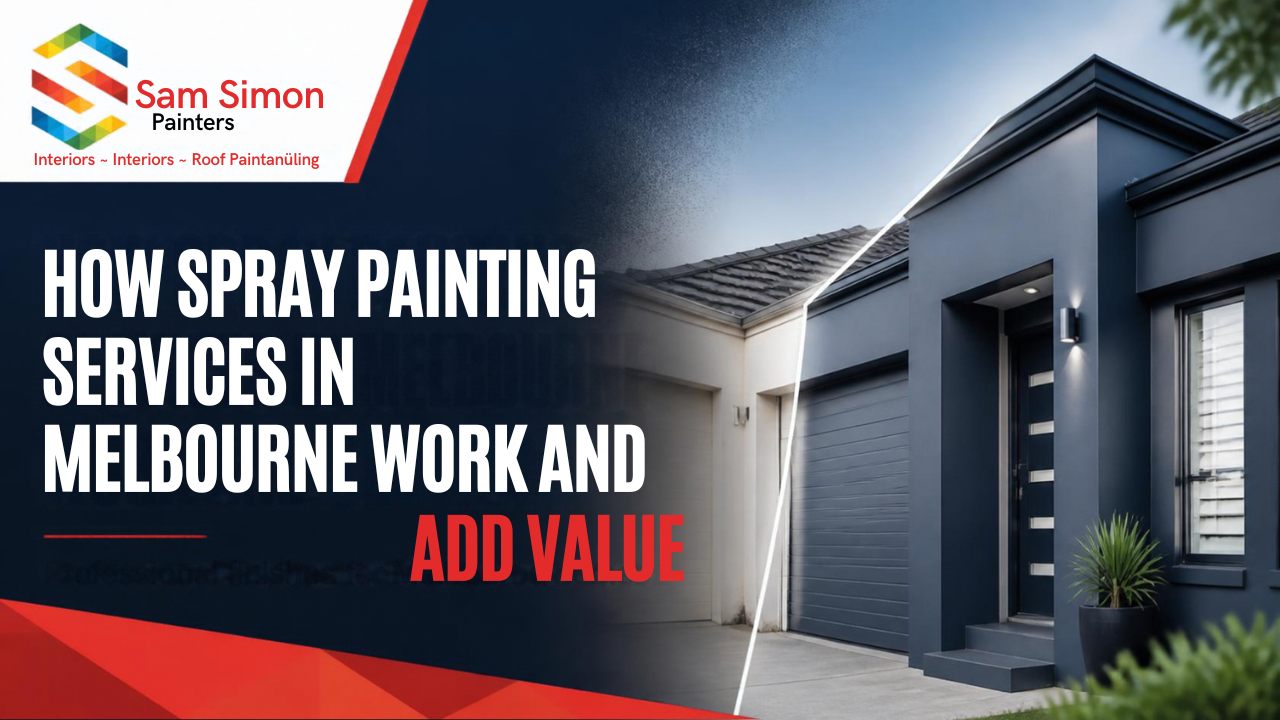
A fresh coat of paint doesn’t guarantee a particular sale price, and nobody can honestly promise you one. What it does is shape first impressions, and those colour how people judge everything else about a property.
Peeling fences, scuffed doors and faded exteriors suggest deferred maintenance, and buyers start wondering what else has been ignored. A clean, consistent finish does the opposite: the property looks cared for and listing photos look sharper. Many owners book spray painting services as part of a pre-sale refresh, focusing on what buyers see first, such as front doors, fences, garage doors, kitchen cabinets and interior doors.
Protection counts too. Coatings that seal timber and metal against moisture help surfaces last longer, which means fewer repairs down the track.
What Affects Your Quote
No two jobs are identical, so a responsible painter inspects before quoting. The main factors are:
- Size of the area
- Condition of the surfaces
- Amount of preparation
- Complexity of the masking
- Paint system and number of coats
- Access (ladders, scaffolding, stairs)
- Drying time between coats
Quotes are based on the scope of work, so the more detail you give, the more accurate the price. Ask for it in writing, with preparation, priming and coats listed.
How to Choose a Spray Painter You Can Trust
The difference between quality work and a rushed job mostly happens where you can’t see it afterwards: preparation, masking, priming and curing time. So look at the process, not only the photos. When comparing spray painting services, ask:
- Are you registered where required and fully insured?
- What preparation will you do on my specific surfaces?
- Which paint and primer will you use, and why?
- How will you protect floors, windows, gardens and neighbouring property?
- How many coats are included, and how long between them?
- Can I see similar jobs you’ve completed?
- Is the warranty in writing, and what does it cover?
Vague answers about preparation are a warning sign. A reputable painter should be able to explain each step clearly.
Frequently Asked Questions
How long does a sprayed finish last?
It depends on the surface, the paint system, the preparation and how much wear or weather the area sees. Well-kept interior finishes can look good for many years, while exteriors need periodic maintenance. Thorough preparation is one of the most important factors.
Can I stay home while the spray painting is underway?
Usually the work area is sealed off and you can use other parts of the house, though it depends on the job and products. Expect some odour and stay out of masked areas. With children, pets or breathing conditions, many people prefer to be elsewhere for the day.
Is water-based spray paint suitable for kitchens and bathrooms?
Yes, when you use a product rated for moisture and high-wear areas and apply it over correct preparation and primer. Good ventilation in bathrooms helps any finish last.
How soon can I use freshly sprayed doors and cabinets?
They may be touch dry within hours but still soft underneath. Handle them gently for the period your painter recommends, and avoid harsh cleaners until the coating has fully cured.
Do I need to move furniture first?
Clear as much as you can. Reputable painters will cover or shift what’s left, but small items, rugs, artwork and curtains should be removed beforehand.
Get a Written Quote for Your Melbourne Property
Planning a pre-sale refresh or updating a business space? Sam Simon Painters will inspect your surfaces, explain the preparation and paint system, and give you a written quote with timing.